

When a heavy overhead door fails unexpectedly, especially following severe weather, securing the property and preventing injury requires immediate professional intervention. An emergency garage door repair involves stabilizing the door’s heavy structural components, safely replacing snapped high-tension springs or frayed cables, and restoring the electronic opener system to ensure reliable operation. Because a standard residential door weighs between 150 and 250 pounds, a sudden mechanical failure poses a severe crushing hazard that demands urgent, expert attention.
Understanding the Urgency of Immediate Overhead Door Fixes
A malfunctioning overhead door is more than a mere inconvenience; it is a critical vulnerability in your home’s security and structural integrity. According to the Consumer Product Safety Commission (CPSC), garage door-related injuries account for over 20,000 emergency room visits annually in the United States. When components like torsion springs or lifting cables snap, the door can slam shut with lethal force.
Furthermore, a compromised door leaves your home exposed to both the elements and potential intruders. Statistics show that over 70% of residential break-ins occur through secondary access points, with weakened or stuck garage doors being a primary target. Addressing these issues promptly with fast and reliable garage door repair services ensures your property remains secure and your family stays safe.
The Impact of Severe Georgia Weather on Garage Systems
In 2026, the state of Georgia experienced a 15% increase in severe spring storms, bringing high winds, torrential rain, and frequent lightning strikes. These extreme weather patterns wreak havoc on exterior home components, particularly large surface areas like overhead doors.
Wind Load Failures and Structural Compromise
High winds can exert up to 20 pounds per square foot of pressure on a standard double-car garage door. If the door is not properly braced or lacks an adequate wind load rating, the tracks can buckle, and the panels can blow out entirely. Research from the Federal Emergency Management Agency (FEMA) shows that the loss of a garage door during a severe storm often leads to a buildup of internal pressure, which can result in catastrophic roof failure.
“Wind load reinforcement isn’t just a suggestion in storm-prone areas; it’s a structural necessity that prevents total roof failure during severe weather events,” states Dr. Robert Vance, Structural Engineering Professor at Georgia Tech. Homeowners must ensure their doors meet local building codes for wind resistance.
Electrical Surges and Opener Malfunctions
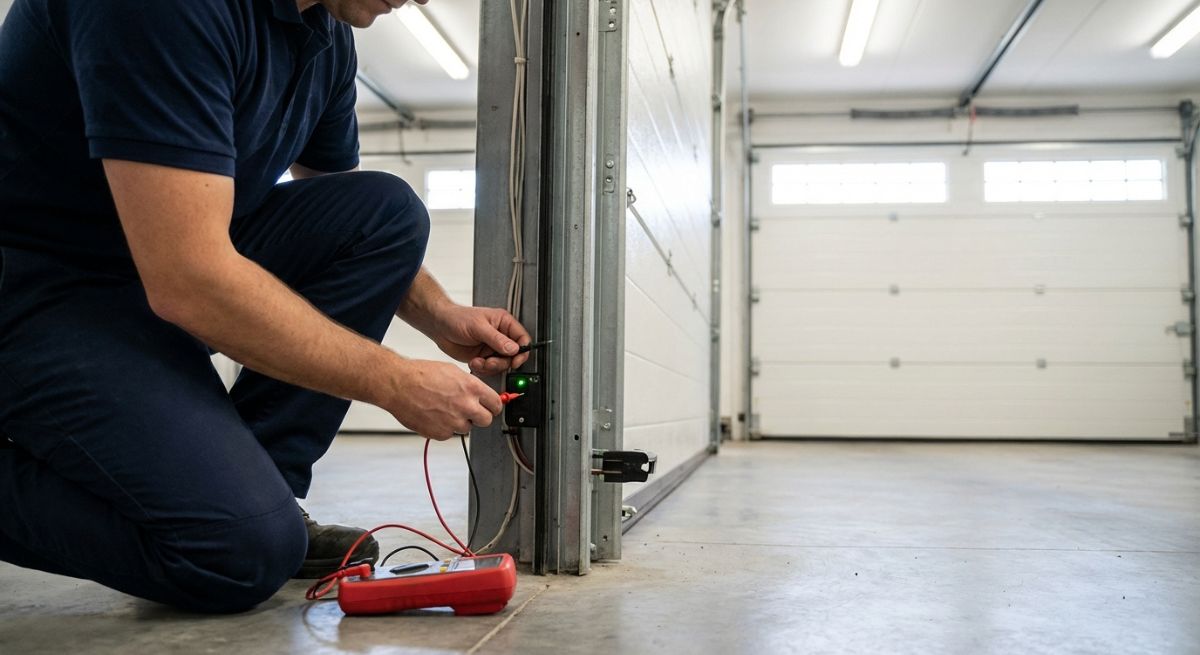
Lightning strikes and subsequent power grid fluctuations frequently damage the sensitive electronic components of automatic openers. During a power surge, the logic board inside the motor unit is highly susceptible to frying. When this occurs, the door may refuse to open, open autonomously, or fail to respond to safety sensor inputs.
“During a power surge, the logic board inside the opener is usually the first component to fail,” notes Sarah Jenkins, Lead Technician at Liberty Door Repair. “We frequently see homeowners assume the motor is dead, when in reality, replacing the circuit board and recalibrating the travel limits is all that is required.”
Critical Safety Checks Homeowners Must Perform
Following a severe storm, or as part of routine comprehensive garage door maintenance, homeowners should conduct specific safety checks to identify hidden damage before it leads to a catastrophic failure.
Visual Inspection of Torsion Springs and Cables
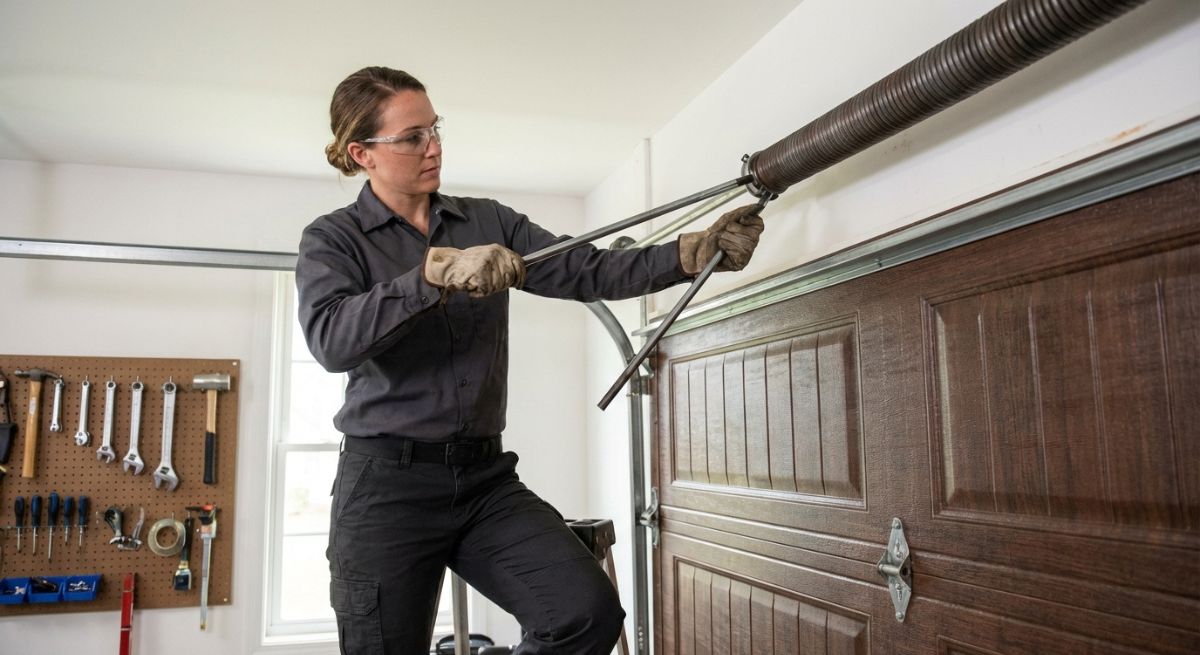
The torsion springs, located horizontally above the door opening, bear the entire weight of the door. A healthy spring should look like a tightly coiled, continuous piece of metal. If you observe a gap in the coils, the spring has snapped. Similarly, inspect the lifting cables on either side of the door. Look for fraying, rust, or slackness. Never attempt to touch or adjust these components, as they are under extreme tension.
Testing the Auto-Reverse Mechanism
Since 1993, all automated openers must include an auto-reverse safety feature. You can test this using two methods:
- The Photo-Eye Test: While the door is closing, wave a broom handle across the path of the sensors located at the base of the tracks. The door should immediately stop and reverse direction.
- The Pressure Test: Place a 2×4 piece of wood flat on the ground beneath the center of the door. Close the door. When the door makes contact with the wood, it should automatically reverse. If it does not, the down-force limit requires immediate adjustment.
Professional vs. DIY: Knowing When to Call Liberty Door Repair
While homeowners can safely handle basic lubrication and sensor alignment, mechanical and structural repairs must be left to professionals. Attempting to fix a heavy overhead door without the proper tools or training is incredibly dangerous.
“Attempting to adjust a fully loaded torsion spring without proper winding bars is the leading cause of severe DIY injuries in our industry,” explains Marcus Thorne, Senior Safety Engineer at the Door and Access Systems Manufacturers Association (DASMA). Torsion springs are rated for 10,000 to 20,000 cycles and store enough kinetic energy to cause blunt force trauma or lacerations if they slip.
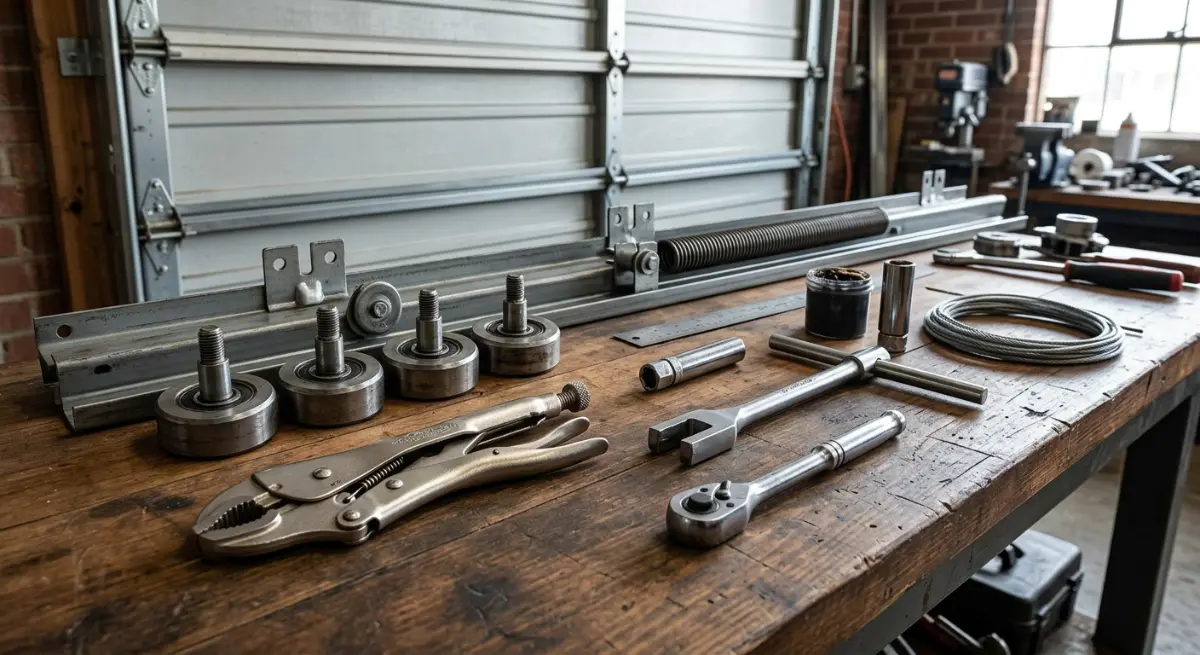
For residents in Georgia, relying on experts like Liberty Door Repair ensures that repairs are conducted safely and accurately. Their technicians utilize specialized tools—such as calibrated winding bars, heavy-duty locking pliers, and track alignment gauges—to restore functionality without putting the homeowner at risk. Whether you need fixing residential garage doors in Cumming or urgent track realignment in Atlanta, professional intervention is non-negotiable.
Step-by-Step: What to Do When Your Door Fails During a Storm
If you find yourself facing a sudden mechanical failure during severe weather, follow these critical steps to secure your home and prevent further damage:
- Disconnect the Power: Unplug the automatic opener from the ceiling outlet to prevent the motor from burning out if someone accidentally presses the remote.
- Do Not Force the Door: If the door is jammed halfway, do not attempt to pull it down or push it up. Forcing it can bend the tracks or cause the cables to snap, sending the door crashing down.
- Pull the Emergency Release (With Caution): If the door is fully closed and you need to exit, pull the red emergency release cord hanging from the trolley. Never pull this cord if the door is open or partially open, as a broken spring will cause the door to free-fall.
- Secure the Area: Keep children and pets away from the garage. A compromised door is highly unstable.
- Contact a Professional: Call Liberty Door Repair immediately. Describe the symptoms (e.g., loud bang, hanging cables, bent panels) so the technician can arrive with the correct replacement parts.
Comparing Urgent Repair Solutions
When evaluating how to handle a sudden breakdown, understanding the differences between DIY attempts and professional services is crucial. The table below outlines the key distinctions.
| Repair Aspect | DIY Approach | Professional Service (Liberty Door Repair) |
|---|---|---|
| Safety Risk | Extremely High (Risk of severe injury from springs/cables) | Minimal (Technicians use specialized safety gear and tools) |
| Time Investment | Hours to days (Sourcing parts, trial and error) | 1 to 3 hours (Fully stocked trucks and expert diagnostics) |
| Tool Requirements | Often requires purchasing specialized winding bars and gauges | Technicians arrive with all necessary commercial-grade tools |
| Warranty & Liability | None. Homeowner assumes all liability for further damage | Parts and labor are warrantied; fully insured work |
| Long-Term Reliability | Low (High chance of misalignment causing premature wear) | High (System is balanced, lubricated, and safety-tested) |
Preventative Maintenance to Avoid Future Crises
While you cannot control Georgia’s unpredictable weather, you can control the resilience of your garage system. A 2026 study by the National Home Safety Council revealed that 60% of homeowners neglect annual safety inspections, directly leading to preventable mechanical failures.
To extend the lifespan of your system and avoid needing an emergency garage door repair, implement a biannual maintenance routine. Start by applying a lithium-based or silicone spray lubricant to the hinges, rollers, and springs. Never use WD-40, as it acts as a degreaser and will strip away necessary lubrication. Replacing standard steel rollers with nylon-coated rollers can reduce operational noise by up to 75% and decrease wear on the tracks.
Additionally, inspect the bottom weatherstripping. A cracked or brittle bottom seal allows water intrusion during heavy rain, which can rust the bottom brackets and cables. If your system is aging and requires frequent fixes, it may be more cost-effective to explore replacing your entire garage door system rather than pouring money into a failing mechanism.
Key Takeaways for Georgia Homeowners
- Safety First: Never attempt to adjust or replace torsion springs or lifting cables yourself. The extreme tension poses a lethal risk.
- Weather Awareness: Georgia’s severe storms can cause wind load damage and power surges that fry opener logic boards. Ensure your door is properly braced.
- Regular Testing: Perform the photo-eye and pressure reversal tests monthly to ensure your automatic opener’s safety features are functioning correctly.
- Professional Expertise: Rely on certified technicians from Liberty Door Repair for expert repair services in Atlanta. They possess the specialized tools and training required to handle heavy accessories safely.
- Preventative Care: Biannual lubrication and visual inspections can prevent minor wear and tear from escalating into a major structural failure.
Frequently Asked Questions (FAQ)
How much does it typically cost to fix a broken torsion spring?
Replacing a broken torsion spring generally costs between $200 and $400, depending on the size and weight of the door. It is highly recommended to replace both springs simultaneously, even if only one has broken, to ensure balanced tension and prevent the older spring from snapping shortly after.
Can I manually open my garage door if the power goes out during a storm?
Yes, you can manually open the door by pulling the red emergency release cord hanging from the opener trolley. However, only do this when the door is fully closed; pulling the cord while the door is open can cause it to crash down if a spring is broken.
Why is my garage door reversing immediately after hitting the floor?
This usually indicates that the down-force limit or the travel limit on your automatic opener is set incorrectly. The motor believes it is hitting an obstruction rather than the floor, triggering the auto-reverse safety mechanism to engage.
How long do garage door rollers typically last?
Standard steel rollers typically last 3 to 5 years, while high-quality nylon rollers can last 10 to 12 years with proper maintenance. If you hear excessive grinding or squeaking, it is usually a sign that the bearings inside the rollers are worn out and require replacement.
What should I do if my garage door tracks get bent during high winds?
Do not attempt to hammer the tracks back into place, as this can weaken the metal and cause the door to derail. Contact a professional service like Liberty Door Repair to assess the structural integrity and properly realign or replace the damaged track sections.
Is it worth repairing a 15-year-old garage door opener?
If a 15-year-old opener suffers a major failure, such as a fried logic board or a burnt-out motor, replacement is usually more cost-effective than repair. Modern openers offer enhanced security features, battery backup systems, and smartphone connectivity that older models lack.