

Did you know that a single slamming door can increase your liability risk by 40% and compromise your entire building’s security in seconds? When a door doesn’t latch properly, it leaves your property vulnerable to intruders and creates a safety hazard for every visitor. You shouldn’t have to worry about these risks or the stress of failing a surprise ADA accessibility audit. If you’re dealing with hardware that’s leaking oil or snapping shut too fast, you need the professional commercial door closer repair atlanta business owners have trusted for over 30 years.
It’s time to stop the disruption and fix the problem for good. We’ll show you exactly why your hardware is failing and how our AAADM-certified technicians can restore your building’s security today. You’ll learn about common mechanical failures and how we ensure every entrance meets strict Atlanta fire codes. This guide provides a clear path to getting your doors closing smoothly and quietly so you can focus on running your business.
Key Takeaways
- Recognize dangerous failure signs like slamming doors and oil leaks that threaten customer safety and your building’s integrity.
- Understand the cost-saving benefits of professional commercial door closer repair atlanta services versus the expense of full hardware replacement.
- Ensure your facility meets strict ADA and Georgia fire codes by mastering the “5-second closing rule” and opening force requirements.
- Evaluate the lifespan of your hydraulic devices to determine if a simple seal repair or a total system upgrade is the right move for your budget.
- Learn why trusting AAADM-certified experts with 30+ years of experience protects your business from liability and ensures long-term door functionality.
What is a Commercial Door Closer and Why Do They Fail in Atlanta?
A commercial door closer is a heavy-duty hydraulic device designed to regulate door swing speed and ensure proper latching. These units are essential for fire safety, security, and energy efficiency in any business environment. To understand the physics behind these devices, you can research What is a door closer? and its various mechanical components. These systems rely on hydraulic fluid to maintain consistent tension during high-traffic hours, especially when a building sees 500 or more visitors daily. Without a functional closer, your door becomes a liability that can cause injury or compromise your building’s climate control.
Atlanta’s climate is notoriously hard on door hardware. During summer months, temperatures frequently exceed 95 degrees. This extreme heat thins the hydraulic oil inside the unit, reducing its viscosity. When the oil becomes too thin, the closer loses its ability to resist the internal spring’s force. This leads to “slamming” symptoms where the door hits the frame with dangerous velocity. Conversely, the high humidity levels in areas like Marietta and Decatur often exceed 70 percent. This moisture penetrates unsealed units and causes internal corrosion. As a trusted expert with 30+ years of experience, Liberty Door Repair knows that Georgia weather is the primary reason businesses require commercial door closer repair atlanta services.
Common Types of Closers Found in Metro Atlanta Businesses
Surface-mounted closers are the most common choice for Alpharetta retail storefronts. They’re mounted to the face of the door or the frame header. These units are visible, making them easy to inspect and adjust quickly. Our technicians prefer these for businesses that need fast, reliable solutions.
Concealed closers are aesthetic-focused options popular in Buckhead office towers. These units are hidden inside the door or the frame itself. They provide a sleek, minimalist look while maintaining full control over the door’s movement. They require specialized knowledge to service because the hardware isn’t immediately accessible.
Floor-spring closers are heavy-duty solutions for high-traffic glass entryways. These are installed under the floor surface. They’re often used in high-end malls or corporate headquarters where heavy glass doors need 180-degree swing capabilities. Our AAADM-certified technicians handle these complex installations daily.
The Mechanics of Failure
Seal degradation is the #1 cause of the dreaded “oil leak” on your door glass. When the internal O-rings fail, hydraulic fluid drips down the door. This isn’t just an aesthetic issue; it’s a sign the closer has lost its damping power. Once the fluid is gone, the door will slam uncontrollably.
Spring fatigue is another major factor. Older closers in historic Decatur buildings often lose their closing power after reaching their 100,000-cycle limit. The internal metal spring loses its tension over time. This leaves the door standing open or failing to latch, which creates a massive security risk for your property.
Improper adjustment is a frequent culprit for total unit failure. Many “DIY” fixes often blow out the internal valves. If a maintenance worker turns the adjustment screw too far, the internal pressure can crack the valve seat. This makes the unit unrepairable. Professional commercial door closer repair atlanta ensures that adjustments are made within the manufacturer’s strict tolerances.
5 Signs Your Business Needs Urgent Door Closer Repair
Your storefront door is the first point of contact for every customer. When the closer fails, it creates immediate safety and security risks. Ignoring these signs leads to expensive replacements or legal liabilities. Professional commercial door repair atlanta services ensure your entrance remains compliant and safe. Our team at Liberty Door Repair brings 30+ years of experience to every job, identifying failures before they become emergencies.
The Danger of the “Slamming” Door
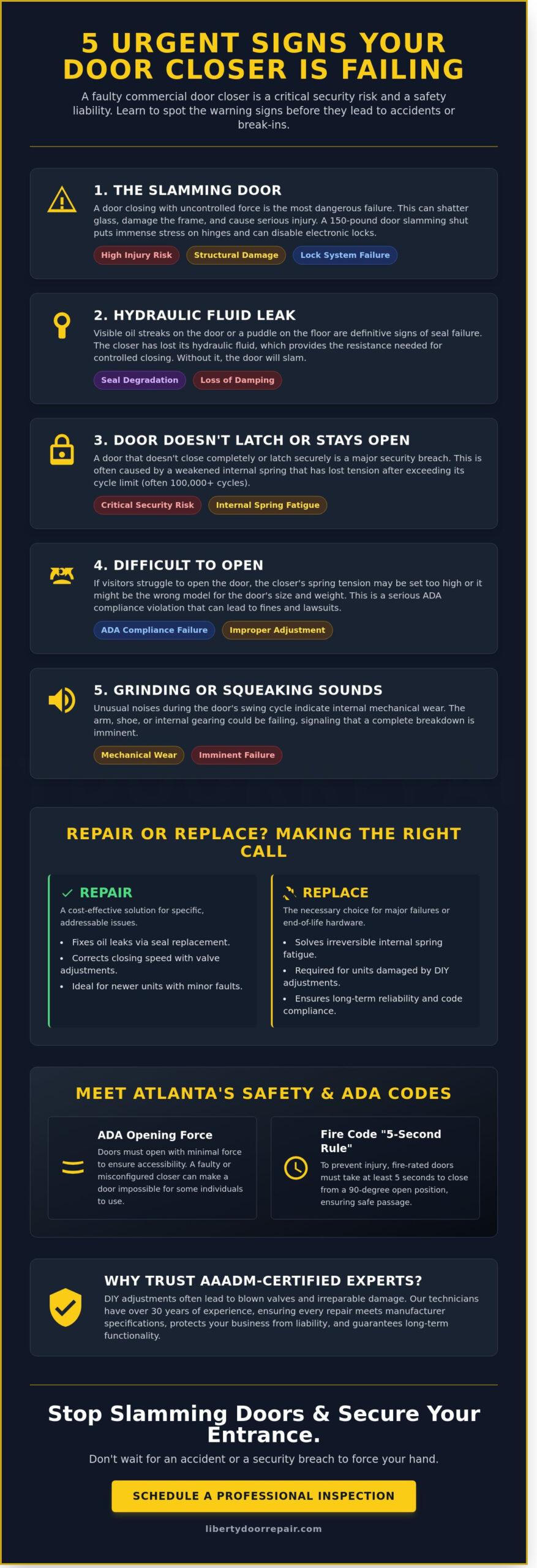
A door that slams shut is a primary cause of workplace injuries, specifically crushed fingers. It puts immense stress on the hinges and the door frame. The intense kinetic energy generated by a slamming 150-pound commercial door often causes micro-fractures that eventually lead to structural glass cracks. This constant impact also vibrates magnetic locks and electronic access control systems, causing internal components to misalign or fail entirely. If your door doesn’t slow down during the last 10 degrees of its swing, the internal sweep valve is likely compromised.
Identifying Hydraulic Fluid Leaks
Check the arm joints and the main body of the closer unit for dark, greasy residue. If you see fluid dripping down the door, the internal seals have failed. Don’t just wipe it off; once the oil is gone, the closer loses its braking ability. In the 90-degree Atlanta humidity, leaking hydraulic fluid can bake into concrete sidewalks, creating permanent stains and slip hazards for pedestrians. A leaking closer is a dead closer that requires immediate professional attention to restore hydraulic control.
The Door is Too Heavy to Open
If your door feels like it weighs 400 pounds, the internal spring is likely seized or the tension is set incorrectly. This is a major barrier to entry that frustrates customers. It also violates the ADA Accessibility Guidelines, which specify strict limits on the force required to open a door. Our AAADM-certified technicians can recalibrate your hardware to ensure your business remains accessible to everyone.
The Door Fails to Latch
A door that stays slightly ajar is a massive security risk. This often happens when the closer lacks the “latching speed” power to overcome the resistance of the door seal or latch bolt. It leaves your Atlanta business vulnerable to intruders after you head home for the night. A simple adjustment or part replacement can ensure the door clicks shut every single time.
Strange Grinding Noises
Mechanical grinding or clicking sounds indicate that internal metal components are rubbing together without lubrication. This mechanical failure can lead to the door jamming in an open or closed position. In extreme cases, a seized closer can snap the mounting bracket, causing the heavy arm to fall. If you hear metal-on-metal sounds, it’s time to call a trusted expert to inspect the unit before it fails completely.
Commercial Door Closer Repair vs. Replacement: Making the Call
Deciding between a quick fix and a full installation depends on the unit’s age and condition. Most commercial closers have a functional lifespan of 5 to 10 years. This duration varies based on daily traffic cycles. A Grade 1 heavy-duty closer is tested for 2 million cycles, while a Grade 3 standard unit handles approximately 500,000 cycles. If your hardware is nearing these limits, replacement is usually the smarter investment. Liberty Door Repair provides the commercial door closer repair atlanta businesses trust to determine the most cost-effective path forward.
Cost-benefit analysis is essential for your bottom line. A repair often solves the problem if the hydraulic body remains intact. If a full replacement is required, repairing a unit that is 9 years old is a waste of capital. Our technicians assess the hardware grade and wear patterns to ensure you don’t overspend on temporary fixes. We bring 30+ years of experience to every inspection to provide an honest assessment. About 85% of storefront closers we inspect in the metro area fail prematurely due to lack of regular adjustment.
When Repair is the Right Choice
- Minor adjustment needs: We fix “sweep” or “latch” speeds via regulating valves. This stops doors from slamming or failing to latch properly.
- Loose hardware: High wind loads in Georgia vibrate mounting plates loose. Re-securing these plates restores stability without requiring new parts.
- Arm replacement: Woodstock or Kennesaw shops often deal with bent linkage from wind gusts or forced entry. Replacing just the arm saves the cost of a new hydraulic body.
When Replacement is Mandatory
Some failures cannot be reversed. If you see oil dripping down the door or pooling on the floor, the seals are blown. These units are factory-sealed. They cannot be refilled in the field and require immediate replacement. Internal mechanical failure, such as a snapped spring, also makes the unit a total loss. Safety is the priority. A broken spring can cause the door to swing uncontrollably.
Upgrading is also necessary to meet modern safety requirements. You may need a fire door services compliant unit to satisfy local building codes and insurance mandates. Our team ensures your hardware meets the ADA standards for doors and gates to maintain accessibility. When a closer fails to provide the required 5 pounds of maximum opening force, it is time for a professional commercial door closer repair atlanta specialist to install a compliant, high-performance replacement.
Meeting ADA and Fire Code Requirements in Georgia
Compliance isn’t just a suggestion for Georgia business owners. It’s a strict legal requirement. Local inspectors in Atlanta frequently cite facilities for door hardware that fails to meet specific accessibility and safety standards. If your hardware is failing, you need a professional commercial door closer repair atlanta specialist who understands the nuances of state and local codes. Liberty Door Repair brings 30+ years of experience to ensure your facility remains compliant and safe for every visitor.
ADA Accessibility Standards
The Americans with Disabilities Act (ADA) sets clear rules for how interior doors must operate. In Atlanta, interior doors must require no more than 5lbs of force to open. If your door is heavy or resists movement, it’s a liability. Improper closer tension is the primary reason for ADA non-compliance fines in Georgia. Our AAADM-certified technicians calibrate your hardware to meet these exact specifications.
Speed is just as important as force. ADA standards require a “Closing Speed” where the door takes at least 5 seconds to move from an open position of 90 degrees to 12 degrees. Within this process, we focus on the Sweep Period. This is defined as the time it takes a door to move from 70 degrees to 3 inches from the latch. For heavy exterior doors that must withstand Georgia wind loads, we install specialized closers that balance “easy-open” standards with secure closing power.
Fire Safety and Latching Force
Fire-rated doors serve as a critical barrier against smoke and flames. According to NFPA 80 standards, fire doors in Sandy Springs and surrounding areas must latch automatically every single time they close. A door that hangs open by even a fraction of an inch allows toxic smoke to bypass the fire assembly. This is why “propping open” a door with a malfunctioning closer is a direct violation of Atlanta fire ordinances. Local fire marshals look for these violations during annual inspections.
- Automatic Latching: The closer must have enough power to engage the latch bolt against the strike plate.
- Smoke Containment: Properly adjusted closers maintain the integrity of fire zones within your building.
- Annual Inspections: Commercial facilities in Metro Atlanta are required to have their fire door assemblies inspected and tested yearly.
Our skilled technicians serve Brookhaven and Roswell, providing the technical expertise needed to pass rigorous local inspections. We don’t just fix the hardware; we provide peace of mind that your building is up to code. If your doors are slamming or failing to latch, don’t wait for a failed inspection or a safety emergency.
Ensure your building meets all Georgia safety codes today. Contact a trusted expert at Liberty Door Repair for a professional compliance check and commercial door closer repair atlanta services.
Why Atlanta Businesses Trust Liberty Door Repair
Liberty Door Repair has served the Metro Atlanta business community since 1996. For over 30 years, we’ve provided specialized solutions for every type of commercial entryway. Our team consists of AAADM-certified technicians who possess deep technical knowledge of both manual and automatic door systems. When you need commercial door closer repair atlanta services, you aren’t just looking for a temporary fix. You need a long-term solution that ensures safety, ADA compliance, and building security. We bring three decades of field experience to every job site, ensuring your hardware is installed correctly the first time.
Our technicians understand the complex mechanics behind hydraulic fluid levels, spring tension, and sweep speeds. We don’t guess; we diagnose. This professional approach has made us the primary choice for local property managers who cannot afford downtime. A malfunctioning door is a liability and a security risk. Our mission is to eliminate that risk with speed and precision.
Our Local Service Footprint
We maintain a rapid response network that spans the entire metro area. Our technicians provide specialized support for retail storefronts in Johns Creek, corporate office parks in Dunwoody, and large-scale industrial warehouses in Suwanee. We also offer priority dispatch for businesses in Alpharetta, Marietta, and Lawrenceville to ensure your facility remains secure after hours.
Every Liberty Door Repair service truck arrives fully stocked with Grade 1 hardware. This heavy-duty equipment is designed for high-traffic environments that see hundreds of cycles daily. Because we carry these parts on hand, we complete 95% of repairs or replacements during the very first visit. Facility managers appreciate our transparent pricing models and professional estimates. We provide clear data on what needs to be fixed and why, which helps you manage your maintenance budget without surprises.
The Liberty Door Repair Difference
Our 30-year history makes us the trusted expert for Atlanta’s most sensitive entryways. We don’t just look at the closer in isolation. Our team analyzes the entire door opening to ensure every component works in harmony. This comprehensive view includes integrating sophisticated access control solutions for high-security areas that require restricted entry. We only use high-quality door parts & replacements specifically chosen to withstand the intense humidity and temperature swings of Georgia weather.
Standard hardware often fails when exposed to local climate stressors, but our Grade 1 selections are built to last. We’re a no-nonsense, dependable local specialist focused on results. Whether you’re dealing with a leaking hydraulic arm or a door that slams shut, we have the tools and the certifications to resolve the issue immediately. Don’t let a faulty closer compromise your building’s safety or energy efficiency. Request your commercial door closer service in Atlanta today!
Secure Your Storefront Today
A malfunctioning door is more than a nuisance; it’s a liability. Slamming doors or leaking hydraulic fluid indicate internal seal failure that compromises your building’s security and climate control. Ignoring these signs often leads to expensive structural damage or non-compliance with Georgia fire codes and ADA accessibility standards. Your entrance must remain safe for every customer who walks through the door. Don’t let a faulty entry point disrupt your daily operations or create a safety hazard for staff. Liberty Door Repair provides expert commercial door closer repair atlanta services backed by 30+ years of local experience. Our AAADM-certified technicians serve all metro Atlanta cities, ensuring your hardware meets every strict safety regulation. We’ve spent three decades helping Georgia business owners keep their entrances functional and secure. We understand the urgency of a broken door and arrive ready to provide immediate solutions. Your business deserves a reliable entrance that works perfectly every single time.
Broken Door? Let’s Get it Fixed! Request Service Now
Frequently Asked Questions
How much does it cost to repair a commercial door closer in Atlanta?
Repair costs vary based on the hardware type and the extent of the damage. According to industry data from HomeAdvisor, professional commercial door repairs typically range from $150 to $600 depending on the specific parts needed. Our technicians provide a detailed estimate after a physical inspection of your storefront or office door. We focus on providing reliable solutions that fit your business budget.
Can I adjust a commercial door closer myself?
You can perform minor speed adjustments using the regulation valves, but internal mechanical repairs require a trusted expert. Turning the adjustment screws more than two full rotations can cause the hydraulic fluid to leak or the internal spring to fail. Our AAADM-certified technicians handle these precise calibrations to ensure your door operates safely and meets all local Georgia building codes.
Why is my commercial door leaking oil from the top?
Oil leaking from the closer body indicates a failed internal seal or a broken O-ring. This hydraulic fluid is essential for controlling the door’s closing speed and preventing it from slamming. Once the seals break, the unit loses its dampening power and becomes a safety hazard. We recommend immediate commercial door closer repair atlanta services because these sealed units usually require a full replacement once they leak.
Is a slamming commercial door a safety violation in Georgia?
Yes, a slamming door violates the Life Safety Code and ADA standards enforced throughout Georgia. Most regulations require a door to take at least 5 seconds to close from a 90 degree open position to the 12 degree latch position. Slamming doors can cause serious impact injuries or finger amputations. Our skilled technicians calibrate your hardware to meet these 5 second minimum requirements to protect your customers.
How long does a commercial door closer typically last?
A high quality commercial door closer typically lasts between 7 and 10 years depending on your daily traffic volume. Grade 1 closers are tested for 2,000,000 cycles, while Grade 2 units are rated for 1,000,000 cycles. If your Atlanta business sees 500 visitors a day, a Grade 1 closer should perform reliably for approximately 11 years. Regular maintenance from an expert helps extend this hardware lifespan.
Do you provide emergency door closer repair in Alpharetta or Marietta?
We provide 24/7 emergency repair services throughout the entire metro Atlanta area, including Alpharetta and Marietta. Our technicians arrive in fully stocked trucks to fix your broken hardware during the first visit. We understand that a malfunctioning door compromises your building’s security and climate control. Call us immediately for rapid response times in Cobb or Fulton County.
What is the difference between Grade 1 and Grade 2 door closers?
The primary difference is the durability rating established by ANSI/BHMA standards. Grade 1 closers are heavy duty units designed for high traffic areas like schools, passing 2,000,000 test cycles. Grade 2 closers are for medium traffic office areas and pass 1,000,000 cycles. Choosing the right grade for your commercial door closer repair atlanta project ensures you don’t face premature hardware failure.
Will a new door closer help my door meet ADA requirements?
A correctly installed and calibrated closer is essential for meeting Americans with Disabilities Act (ADA) standards. The law requires that interior doors take no more than 5 pounds of force to open for accessibility. We use specialized force gauges to measure opening resistance and closing speed. Our 30+ years of experience ensures your entryways comply with all federal accessibility guidelines and local fire codes.