

The secret to a quiet, long-lasting overhead door isn’t just about spraying everything in sight. Proper garage door maintenance requires applying the right type of lubricant—specifically white lithium grease or silicone spray—to high-friction moving parts like hinges, springs, and metal rollers. Crucially, you must never spray lubricant inside the tracks or on nylon roller wheels, as this attracts dirt and causes the mechanism to slide rather than roll, leading to premature failure.
According to the Door & Access Systems Manufacturers Association (DASMA), an average residential overhead door opens and closes approximately 1,500 times per year. Without proper lubrication, the metal-on-metal friction generates excessive heat and wear, reducing the lifespan of the motor and hardware by up to 50%. In 2026, with the rising costs of home repairs, implementing a bi-annual lubrication routine is the most cost-effective way to protect your investment.
The Science of Keeping Your Overhead Door Running Smoothly
Friction is the primary enemy of any mechanical system. When heavy steel panels travel up and down a track, the hinges pivot, the rollers spin, and the torsion springs coil and uncoil under immense tension. Over time, factory-applied lubricants degrade, leaving bare metal exposed to the elements.
Research from the International Door Association indicates that 70% of premature operational failures are directly linked to inadequate or improper lubrication. When parts dry out, the opener motor has to work up to 30% harder to lift the heavy panels. This excess strain strips the gears inside the opener and can lead to snapped cables or broken springs.
“Homeowners often over-lubricate, creating a sticky paste of dirt and grease that destroys nylon rollers and throws the entire system out of alignment,” explains Marcus Thorne, Senior Safety Inspector at the Home Safety Council.
Understanding Lubricants: What Works Best in 2026
Not all sprays are created equal. Walking down the hardware store aisle, you will see dozens of options, but only two are truly suitable for your overhead door system. Using the wrong product can actually cause more harm than good.
Lithium Grease vs. Silicone Spray
The two gold standards for overhead door hardware are white lithium grease and silicone spray. White lithium grease is a heavy-duty, highly viscous lubricant that clings to metal surfaces. It is ideal for metal-to-metal contact points because it does not drip or wash away easily. Silicone spray, on the other hand, is lighter, dries quickly, and leaves a waterproof, non-stick film. It is excellent for environments with high moisture and for penetrating tight spaces.
| Lubricant Type | Best Used For | Pros | Cons |
|---|---|---|---|
| White Lithium Grease | Metal hinges, metal rollers, springs | Long-lasting, high viscosity, reduces heavy friction | Can be messy, attracts some dust over time |
| Silicone Spray | Springs, locks, weatherstripping | Water-resistant, dries clear, doesn’t attract dirt | Requires more frequent application than lithium |
| Standard WD-40 | Rust removal only (NOT lubrication) | Great for breaking loose rusted bolts | Strips existing grease, dries out parts |
Why Standard WD-40 is a Major Mistake
One of the most common mistakes homeowners make is reaching for standard WD-40. The “WD” stands for Water Displacement. It is a solvent, not a true lubricant. If you spray standard WD-40 on your hinges or springs, it will break down and strip away the existing grease, leaving the metal completely dry once the solvent evaporates. If you must use a WD-40 branded product, ensure it is their specialized “White Lithium” or “Silicone” formula specifically designed for overhead doors.
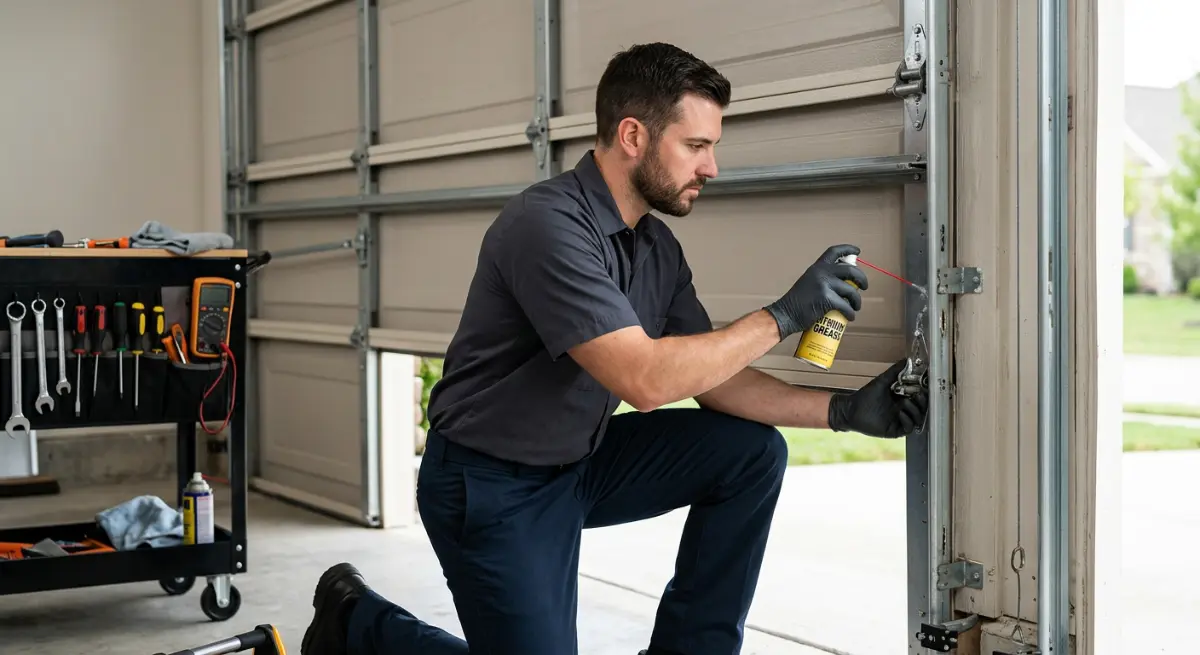
The Ultimate Lubrication Guide: Where to Spray
Targeted application is the key to effective servicing. You only need a light coating on the specific points of friction. Here is exactly where you should be applying your chosen lubricant.
1. Hinges and Pivot Points
The hinges hold the panels together and pivot as the door rounds the curve of the track. Apply a small burst of white lithium grease to the pivot points of each metal hinge. Manually open and close the door a few times to work the grease into the micro-crevices of the metal.
2. Rollers (Nylon vs. Steel)
How you treat your rollers depends entirely on their material. If you have all-steel rollers, you can spray the ball bearings inside the roller wheel, as well as the stem where it connects to the hinge. However, if you have nylon rollers (which are standard in 2026 for quiet operation), you must only lubricate the metal stem. Keep all petroleum-based sprays away from the nylon wheels, as the chemicals will degrade the plastic and cause them to crack.
3. Springs and Bearing Plates
The torsion springs (located above the door) or extension springs (located along the upper tracks) do the heavy lifting. Spraying these with a light coat of silicone spray prevents rust and reduces the binding friction between the coils. Additionally, apply a quick spray to the bearing plates at both ends of the spring bar to ensure the shaft rotates smoothly.
The Danger Zones: Where NOT to Spray Lubricant
Knowing where to avoid spraying is just as important as knowing where to apply it. Applying grease to the wrong areas creates severe safety hazards and operational failures.
The Tracks
Never spray lubricant inside the vertical or horizontal tracks. The tracks are designed to provide a clean, high-friction path for the rollers to grip. If you grease the tracks, the rollers will slide and skid instead of spinning. This skidding flattens one side of the roller wheel, permanently ruining it. Furthermore, sticky grease in the tracks acts like a magnet for dust, dead insects, and debris, eventually forming a thick sludge that will derail the system.
“Using standard degreasers or heavy oils on your tracks is the number one cause of roller derailment we see in the field,” says John Davies, Lead Technician at Liberty Door Repair. “Tracks should be wiped clean with a damp rag, never lubricated.”
The Opener Chain or Belt
If you have a belt-drive opener, keep all chemicals far away from the rubber belt. Lubricants will deteriorate the rubber and cause it to snap. If you have a chain-drive opener, the chain comes pre-lubricated from the factory. Unless specifically recommended by the manufacturer, adding extra grease will only cause it to drip onto your car below.
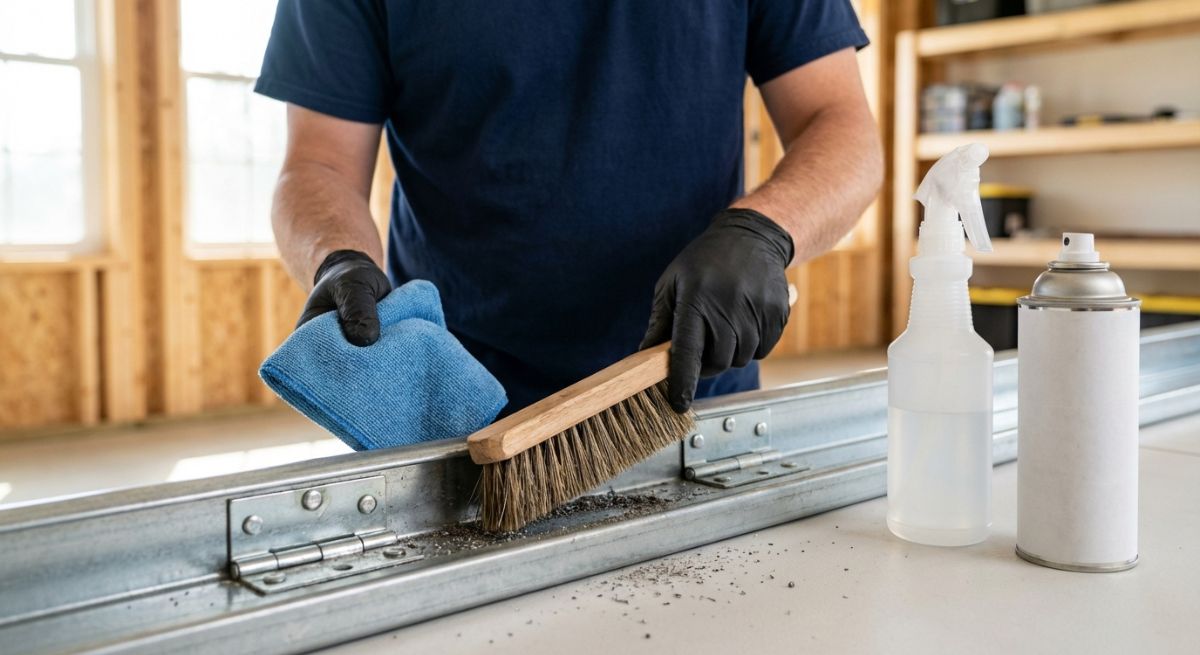
Essential Tools and Accessories for Proper Upkeep
Before beginning your routine, gather the right equipment. The accurate use of garage door accessories and tools ensures the job is done safely and effectively. You will need:
- Safety Glasses: To protect your eyes from falling debris and aerosol blowback.
- Microfiber Rags: For wiping down tracks and cleaning off old, dirty grease.
- Step Ladder: A sturdy A-frame ladder to safely reach the torsion springs and upper hinges.
- Socket Set: To tighten any loose nuts and bolts on the hinges before lubricating.
- White Lithium Grease & Silicone Spray: The primary lubricants for the job.
Georgia Climate Considerations for Overhead Doors
Location plays a massive role in how often you should service your system. Homeowners in Georgia face unique environmental challenges. With Georgia’s average summer humidity hovering around 71%, bare metal components are highly susceptible to oxidation. In fact, high-humidity environments can accelerate rust formation by up to 40% compared to arid climates.
Because of this moisture, silicone-based sprays are highly recommended for Georgia residents, as they provide a superior water-resistant barrier. As the experts at Liberty Door Repair note, coastal and high-humidity areas require quarterly lubrication rather than the standard bi-annual schedule. If you are looking for local overhead door upkeep, understanding these regional climate factors is essential for long-term reliability.
Step-by-Step Routine for Optimal Performance
Executing a proper garage door maintenance routine takes less than 30 minutes but adds years to the life of your system. Follow these sequential steps for the best results:
- Disconnect the Power: Always unplug the automatic opener from the ceiling outlet before starting. This prevents the system from accidentally activating while your fingers are near pinch points.
- Clean the Tracks: Take a damp microfiber rag and wipe out the inside of the vertical and horizontal tracks. Remove any cobwebs, dirt, or old grease buildup. Wipe them completely dry.
- Tighten the Hardware: The vibration of daily use loosens nuts and bolts. Take your socket wrench and gently tighten the bolts on all hinges and roller brackets. Do not overtighten, as you can strip the metal.
- Apply Lubricant: Using the guidelines above, apply white lithium grease to the hinges and metal roller stems, and silicone spray to the springs and bearing plates.
- Wipe Away Excess: Use a clean rag to dab away any dripping grease. A thin film is all that is required.
- Test the Balance: Reconnect the power. Pull the emergency release cord and lift the door manually. It should lift smoothly and stay open halfway without falling. If it feels excessively heavy, your springs may be failing.
For those who prefer to leave this to the professionals, finding affordable service options ensures the job is done safely and to manufacturer specifications.
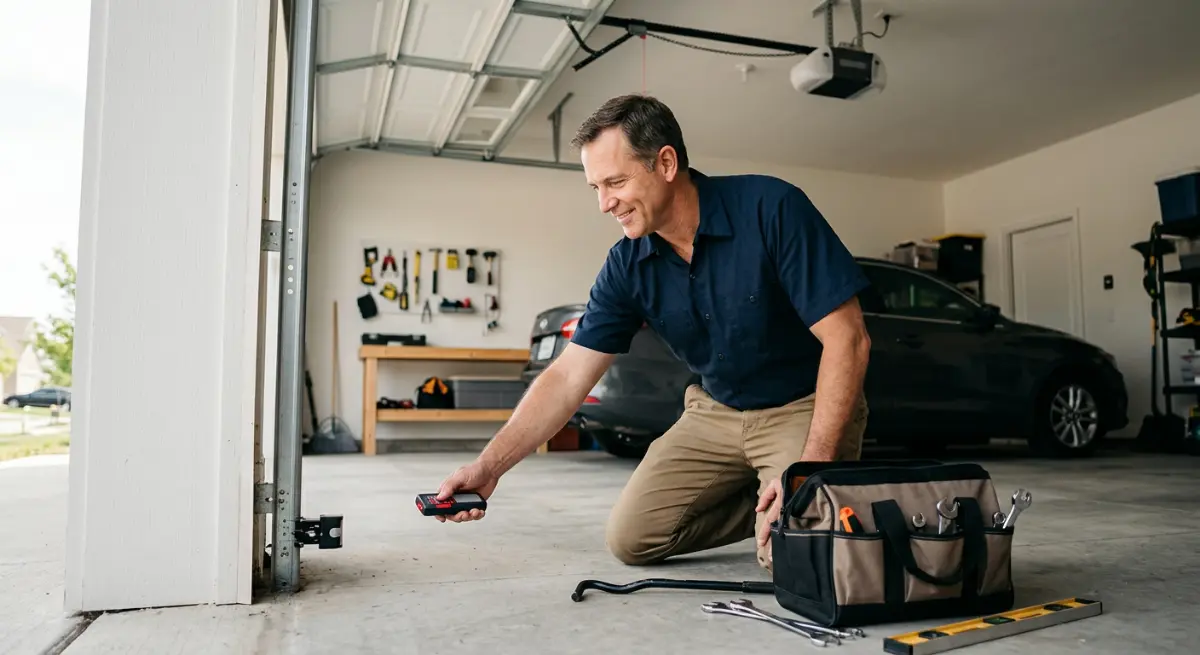
When to Call Liberty Door Repair
While lubrication is a safe DIY task, certain aspects of overhead door care are extremely dangerous and require professional intervention. The torsion springs, for example, hold enough kinetic energy to cause severe injury or death if they snap or are adjusted incorrectly. According to the U.S. Consumer Product Safety Commission, thousands of individuals are treated in emergency rooms each year for injuries related to overhead door systems.
You should immediately contact Liberty Door Repair if you notice:
- The door sits unevenly on the ground, leaving a gap on one side.
- You hear loud popping or grinding noises that persist even after lubrication.
- The lifting cables appear frayed, rusted, or slack.
- The torsion spring has a visible gap in the coils (indicating a break).
- The door feels incredibly heavy to lift manually.
Whether you need reliable repair services in Atlanta or are considering installing a new system entirely, trusting certified technicians ensures your home remains secure and functional.
Key Takeaways
- Use the Right Product: Stick to white lithium grease for metal-to-metal friction points and silicone spray for springs and weatherstripping.
- Avoid Standard Solvents: Never use standard WD-40, as it strips away necessary grease and dries out components.
- Keep Tracks Clean, Not Greased: Lubricating tracks causes rollers to skid and derail. Wipe them clean with a dry or damp rag instead.
- Mind the Climate: Georgia’s high humidity in 2026 demands proactive rust prevention. Lubricate your system quarterly.
- Safety First: Never attempt to adjust springs or cables yourself. Rely on Marietta repair specialists or your local professionals for high-tension components.
By dedicating a small amount of time to proper upkeep, you can avoid the inconvenience of a trapped vehicle and the expense of emergency repairs. For comprehensive assistance, including fixing overhead doors in Cumming and the greater Georgia area, professional servicing remains the gold standard for home safety.
Frequently Asked Questions (FAQ)
How often should I lubricate my overhead door?
For most homes, lubricating the moving parts every six months is sufficient. However, if you live in a high-humidity area like Georgia or near the coast, you should increase this to every three to four months to prevent rust.
Can I use Vaseline or motor oil on the hinges?
No, you should never use petroleum jelly (Vaseline) or standard motor oil. These heavy, sticky substances attract massive amounts of dirt and dust, which will eventually grind down the metal components and cause the hinges to bind.
Why is my door still squeaking after I sprayed it?
If the squeaking persists after proper lubrication, you may have worn-out roller bearings, a misaligned track, or a failing torsion spring. At this point, it is best to have a professional technician inspect the system for underlying mechanical issues.
Do I need to lubricate the garage door opener chain?
Generally, no. Most modern chain-drive openers come pre-lubricated from the factory and do not require additional grease. Adding extra lubricant can cause it to drip onto your vehicles and attract debris.
What is the best way to clean the tracks?
The safest and most effective method is to wipe the inside of the tracks with a damp microfiber cloth to remove dirt and dead insects. Follow up with a dry cloth to ensure no moisture is left behind that could cause rust.
How do I know if my torsion spring is failing?
Signs of a failing spring include the door feeling excessively heavy when lifted manually, the door falling quickly instead of holding its position halfway up, or visible gaps and rust along the spring coils.