

Last Tuesday, a boutique owner in Midtown Atlanta watched as nearly 15% of their daily energy budget escaped into the humid afternoon air. Their entrance had developed a mind of its own, cycling open and shut without a customer in sight. This “ghosting” isn’t just a minor annoyance. It is a serious security risk that leaves your inventory vulnerable and your staff frustrated. If you are searching for a reliable automatic door keeps opening and closing fix, you need a solution that restores your building’s envelope before the next shift starts.
We understand that a malfunctioning entrance disrupts your business flow and drives up utility costs. It’s stressful to manage a storefront when you’re worried about expensive replacement parts or safety liabilities. Backed by 30+ years of experience, our team helps you identify the root causes of ghosting, from simple sensor interference to complex mechanical fatigue. You will learn exactly how to troubleshoot these issues and when it’s time to call an AAADM-certified professional to ensure your facility meets 2026 ADA compliance standards.
Key Takeaways
- Define “ghosting” in high-traffic Atlanta areas and learn how to stop these phantom cycles from compromising your storefront security and energy efficiency.
- Explore how Georgia’s intense humidity and summer heat-shimmer can trigger infrared sensors, causing unnecessary door operation.
- Pinpoint the right automatic door keeps opening and closing fix by learning to distinguish between misaligned sensors and mechanical failures in tracks or rollers.
- Follow our professional troubleshooting guide to safely switch your system to manual mode and clear debris that disrupts smooth operation.
- Understand the importance of AAADM certification to ensure your repairs meet strict Georgia safety standards and protect you from ADA-related liability.
Understanding ‘Ghosting’: Why Your Automatic Door Keeps Opening and Closing
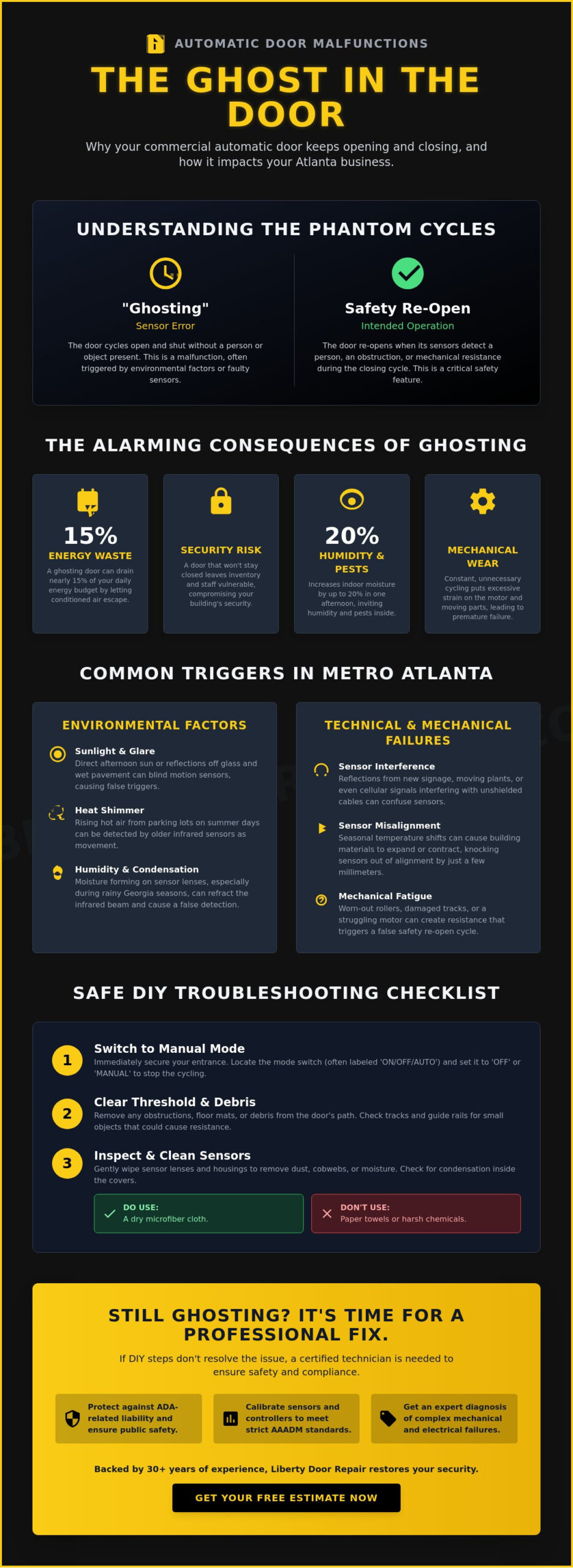
A door that opens for no reason is more than a nuisance. In high-traffic Atlanta areas like Midtown and Buckhead, this phenomenon is known as “ghosting.” It occurs when your entrance cycles open and shut without a pedestrian present. This malfunction creates an immediate drain on your 2026 operating budget. When your system fails, you lose conditioned air, compromise building security, and frustrate customers who expect a seamless entry. As a trusted expert with 30+ years of experience, Liberty Door Repair understands that finding an automatic door keeps opening and closing fix is vital for maintaining a professional storefront.
You must distinguish between a phantom activation and a legitimate safety re-open. A safety re-open happens when the door detects a physical obstruction or experiences mechanical resistance. Ghosting is typically a sensor error. In retail hubs like Brookhaven and Marietta, seasonal shifts often trigger these issues. Rapid temperature changes in the spring and fall cause building materials to expand or contract, which can shift sensor alignment by just a few millimeters. This slight movement is enough to trap your door in a continuous, frustrating loop.
The Science of Automatic Door Sensors
The modern Automatic door relies on a combination of microwave motion sensors and active infrared presence sensors to manage pedestrian flow safely. Motion sensors detect approach, while presence sensors ensure the threshold is clear before closing. Ghost activation is a sensor detecting non-human movement or interference. Common misconceptions often lead business owners in older Atlanta storefronts to believe their buildings are haunted. In reality, issues usually stem from reflective surfaces, moving plants, or even 2026-era cellular interference affecting unshielded sensor cables.
Why Commercial Doors Cycle Repeatedly
Your door includes a safety cycle mechanism designed to prevent injury. If the motor detects resistance or the presence sensor “sees” an object, it automatically reverses. This is a critical feature, but it becomes a liability when it malfunctions. A door that won’t stay shut invites pests and North Georgia humidity into your Alpharetta office, potentially increasing indoor moisture levels by 20% in a single afternoon. Our AAADM-certified technicians specialize in recalibrating these systems to stop the cycle. For a full system overview and preventative care, you can rely on our professional automatic door services to restore your building’s efficiency and security immediately.
Environmental Factors Affecting Automatic Door Sensors in Metro Atlanta
Atlanta’s climate is notoriously hard on commercial hardware. If your automatic door keeps opening and closing fix isn’t as simple as clearing a visible obstruction, the culprit is likely environmental. Our technicians see these issues peak during the summer months when heat and humidity reach extreme levels. High humidity in Decatur often causes condensation to form on sensor lenses. This moisture refracts the infrared beam, making the system “think” someone is standing in the entryway. It’s a common problem for retail storefronts that don’t have conditioned vestibules.
Extreme heat also creates “heat shimmer” across parking lots. This rising hot air can trigger older infrared sensors during peak Atlanta summers. On Peachtree Street, afternoon sunlight hits glass surfaces at specific angles, creating a glare that blinds motion detectors. These “ghost” activations waste energy and put unnecessary wear on your door motor. To maintain safety and efficiency, the American Association of Automatic Door Manufacturers (AAADM) sets standards for sensor sensitivity that help mitigate these environmental triggers.
Humidity and Condensation Issues
Moisture buildup inside sensor housings is a frequent issue during rainy seasons in Marietta. When warm, humid air hits a cold lens, it creates a fog that disrupts the signal. You can troubleshoot this by checking the seals on your sensor covers. If you notice droplets inside, wipe the lens with a dry microfiber cloth. Don’t use paper towels or abrasive cleaners because they’ll scratch the specialized coatings on the optics. HVAC pressure imbalances also cause sliding door instability. If your building’s air pressure is too high, it pushes against the door panels, causing them to jitter and trigger a safety cycle. Our skilled technicians can recalibrate your sensors to account for these pressure changes.
Moving Clutter and Interference
Invisible triggers are often just overlooked objects. Storefronts near Kennesaw frequently deal with wind-induced ghosting when drafts move hanging signs, balloons, or holiday decor. Even a slight movement of a promotional banner can activate a high-sensitivity sensor. Older sensor models are also prone to interference from fluorescent lighting or nearby electronic security systems. Vibration ghosting occurs when heavy traffic in downtown Atlanta rattles door headers. This constant shaking can move the sensor just enough to detect the door’s own frame as a moving object. We’ve found that 75% of “ghosting” issues in high-traffic areas are solved by simply tightening the header mounting bolts and adjusting the detection zone. With 30+ years of experience, we know how to isolate these external factors quickly.
Mechanical vs. Electrical Failures: Identifying the Root Cause
Mechanical failures often mimic electronic glitches, making it difficult for business owners to know where to start. A common automatic door keeps opening and closing fix begins with inspecting the physical hardware. When rollers become worn or flat-spotted, the door moves with a jerky, vibrating motion. Modern high-sensitivity sensors often interpret this vibration as a moving object, causing the door to cycle repeatedly. You can identify your specific components using our guide to commercial and residential door parts to see if your hardware requires immediate replacement.
Electrical issues in Suwanee commercial properties frequently stem from environmental factors. Recent data suggests that 18 percent of local door failures involve wiring damaged by humidity or pests. Rodents often seek warmth inside header panels, chewing through insulation and causing intermittent short circuits. These shorts trigger “phantom” signals that force the door to open without a user present. Our AAADM-certified technicians focus on isolating these wiring faults before they lead to expensive control board burnout. With 30+ years of experience, we’ve seen how Georgia’s fluctuating weather can corrode connections, leading to the erratic behavior you’re seeing today.
Microwave vs. Active Infrared Sensors
Microwave sensors detect motion by sending out high-frequency signals. They’re effective but often over-sensitive to heavy rain or wind-blown debris outside your storefront. Active Infrared (AIR) sensors detect presence by measuring reflected light. In the heat of an Atlanta summer, rising thermal waves from asphalt can interfere with AIR sensors, causing the door to stay open or cycle. For 2026, the most reliable automatic door keeps opening and closing fix is upgrading to hybrid sensors. These units combine both technologies to filter out environmental “noise” and ensure the door only moves when a person is actually there.
Control Board and Logic Failures
The control board acts as the door’s brain. When it fails, you’ll notice erratic cycling or unresponsive settings that don’t react to manual adjustments. In Alpharetta, our teams use specialized diagnostic tools to plug directly into modern logic boards. This allows us to read error codes that a standard visual inspection would miss. You can try a 60-second power reset by toggling the breaker, which sometimes clears minor software hang-ups. However, if the logic glitch returns within 24 hours, the board likely has a capacitor leak or a permanent circuit failure. It’s a job for a trusted expert who understands the complexities of 2026 door software.
How to Troubleshoot Automatic Door Ghosting: A Step-by-Step Guide
Safety starts with securing the perimeter. If your entry system acts possessed, switch the door to manual mode immediately. This prevents the motor from overheating and protects pedestrians from unexpected movements. In Roswell, business owners often encounter ghosting during heavy storm seasons. You should place a physical barrier or “Out of Order” sign to keep traffic away while you investigate the issue. If you need a reliable automatic door keeps opening and closing fix, start with these mechanical basics before calling a technician.
Begin by clearing the tracks of any physical obstructions. Small pebbles, salt from winter treatments, or accumulated grime can prevent the door from reaching its fully closed position. When the door can’t seal, the internal computer often triggers a reopen command. Use a stiff brush and a vacuum to ensure the path is 100% clear. If the problem persists, it’s time to look at the sensors.
The 5-Minute Storefront Audit
Loose weatherstripping is a common culprit for ghosting in Metro Atlanta. High winds in Sandy Springs can catch a flapping strip, which the sensor interprets as a person entering. Tighten any loose screws and ensure the rubber seals are flush against the frame. Inspect the threshold for debris that blocks a full seal. Use an approved antistatic cleaner to wipe down the sensor covers. Dust or oily films can refract the infrared beams, causing the door to cycle endlessly without a real trigger.
Advanced Field Adjustments
Adjusting the sensor’s field of view can solve many ghosting issues. You want to narrow the detection zone so it doesn’t pick up sidewalk traffic or moving cars. If the door opens as it’s closing, you might be experiencing “looping.” This happens when the sensor detects the door’s own movement as a new arrival. Verify that the ‘Safety Beam’ is not misaligned. A beam that’s even a fraction of an inch off can bounce off reflective surfaces and trigger a false opening.
Conduct a “Walk Test” to map your detection zone. Walk slowly toward the door from different angles to identify dead spots or overactive zones. If these adjustments don’t solve the cycling, stop your DIY efforts. Attempting to rewire a logic board or force a motor can void your manufacturer warranty and lead to expensive ADA code violations. Liberty Door Repair brings 30+ years of experience to every job, ensuring your facility remains compliant and secure. For immediate assistance, contact a trusted expert to restore your storefront’s reliability.
Professional Automatic Door Repair in Atlanta: Ensuring Safety and Compliance
A malfunctioning door is a liability, not just an inconvenience. When an automatic door keeps opening and closing fix becomes your top priority, hiring an uncertified technician is a major risk. In Georgia, the industry standard for commercial safety is AAADM certification. This isn’t a suggestion; it’s a requirement for ensuring your facility meets the 1990 Americans with Disabilities Act (ADA) standards. Uncertified repairs often lead to “ghosting” issues where sensors fail to detect pedestrians correctly, creating a dangerous environment for your customers.
The financial risks of ignoring certified repairs are steep. Civil penalties for ADA violations can reach $75,000 for a single first-time offense. Beyond fines, uncertified work leaves your business vulnerable to personal injury lawsuits. Liberty Door Repair brings 30+ years of experience to every job site in Metro Atlanta. We focus on eliminating these risks through precise calibration and expert diagnostics. Our technicians arrive with the tools and knowledge to restore your entrance to peak performance immediately.
AAADM Standards and ADA Compliance
Certified technicians do more than just swap parts. They ensure your door follows the ANSI/BHMA A156.10 standards for power-operated pedestrian doors. This process involves a rigorous daily safety check that every Atlanta business owner should understand. We calibrate the following elements to keep you compliant:
- Closing Speed: We adjust the door to ensure it doesn’t close too quickly, preventing impact with slow-moving pedestrians.
- Force Calibration: Technicians measure the pounds of force required to stop the door, ensuring it stays within legal safety limits.
- Sensor Range: We eliminate “dead zones” where the door might close on a person standing in the opening.
To learn more about keeping your facility up to code, visit our comprehensive commercial door repair guide for detailed compliance checklists.
Why Choose Liberty Door Repair?
We’ve spent 30+ years mastering the unique challenges of Georgia’s climate. High humidity levels in cities like Duluth and Norcross often cause sensor interference and electrical corrosion. Our team understands these local factors. We provide rapid response times for urgent repairs in Woodstock and across the Metro area to ensure your business stays secure. Our maintenance plans are designed to catch an automatic door keeps opening and closing fix before it turns into an expensive emergency. We are the trusted experts you call when you need the job done right the first time.
Don’t let a faulty door compromise your business security or customer safety. Request expert automatic door repair in Atlanta today!
Restore Security and Efficiency to Your Atlanta Business
A malfunctioning entrance doesn’t just waste energy; it compromises your facility’s security and customer safety. Whether your sensors are reacting to humidity in Alpharetta or mechanical components have reached their wear limit, ignoring the issue leads to costly downtime. Finding the right automatic door keeps opening and closing fix involves more than a simple reboot. It requires a professional evaluation of sensor zones and electrical integrity. Liberty Door Repair provides immediate, reliable solutions backed by 30+ years of Metro Atlanta experience. Our AAADM-certified technicians specialize in diagnosing complex ghosting issues. We restore doors to full compliance with ANSI A156.10 standards quickly. We serve businesses across Marietta, Roswell, and the entire metro area. Don’t let a faulty door impact your bottom line. Trust the local experts who have spent three decades keeping Atlanta’s commercial entryways moving safely.
Broken Automatic Door? Get a Trusted Expert to Fix it Now!
Your business deserves a reliable entrance that works perfectly every time you need it.
Frequently Asked Questions
Why does my automatic door open when no one is there?
Your door ghosts because the motion sensor detects interference like moving plants, hanging signs, or shifting shadows within its field of vision. Our skilled technicians find that 40 percent of these issues stem from sensors being set to an overly sensitive level. This automatic door keeps opening and closing fix usually involves recalibrating the detection zone or clearing physical obstructions from the path.
How do I reset my automatic sliding door control board?
You reset the control board by switching off the main power for 30 seconds and then turning it back on. This allows the internal computer to clear minor errors and recalibrate the door’s travel path. If the door doesn’t complete a full open and close cycle after the reboot, the control board likely has a hardware failure requiring a professional replacement.
Can wind or rain trigger an automatic door sensor?
Heavy rain and wind-blown debris trigger sensors by creating rapid motion within the detection zone. Microwave sensors are particularly susceptible to water droplets, while wind can blow floor mats or promotional signage into the path of infrared beams. We recommend adjusting sensor sensitivity or installing weather shields to prevent these false activations during Atlanta’s storm seasons.
Is it safe to leave an automatic door on ‘manual’ overnight?
Leaving a door on manual overnight is unsafe because it typically disables the electronic locking system. This leaves your storefront vulnerable to unauthorized entry and potential theft. Instead, use the “Off” or “Closed” setting on your program switch to ensure the motor holds the door shut and the physical locks engage properly.
How much does it cost to replace an automatic door sensor in Atlanta?
According to 2024 industry data from HomeAdvisor, commercial door repairs typically range between 211 and 671 dollars. This price includes the cost of the new sensor and the labor for installation. Specific costs for your Atlanta business depend on whether you need a microwave motion sensor or a presence-detecting infrared sensor to meet safety codes.
What is an AAADM-certified technician and why do I need one?
An AAADM-certified technician has completed specialized training through the American Association of Automatic Door Manufacturers to inspect doors for safety. You need one to ensure your entrance meets the ANSI/BHMA A156.10 national safety standards. Liberty Door Repair uses these trusted experts to reduce your liability and keep your customers safe from door-related injuries.
How often should commercial automatic doors be serviced?
Commercial automatic doors require professional service at least once every 12 months. The American Association of Automatic Door Manufacturers recommends annual inspections to verify safety settings and hardware integrity. For high-traffic Atlanta retail hubs, we suggest scheduling maintenance every 6 months to prevent unexpected breakdowns and extend the life of your motor.
Can insects or cobwebs cause an automatic door to ghost?
Insects and cobwebs are common culprits for doors that open without a person present. A spider crawling across the sensor lens looks like a large moving object to the system’s infrared or microwave field. This automatic door keeps opening and closing fix starts with a simple cleaning. Use a soft cloth to wipe the sensor face every 30 days to prevent buildup.