

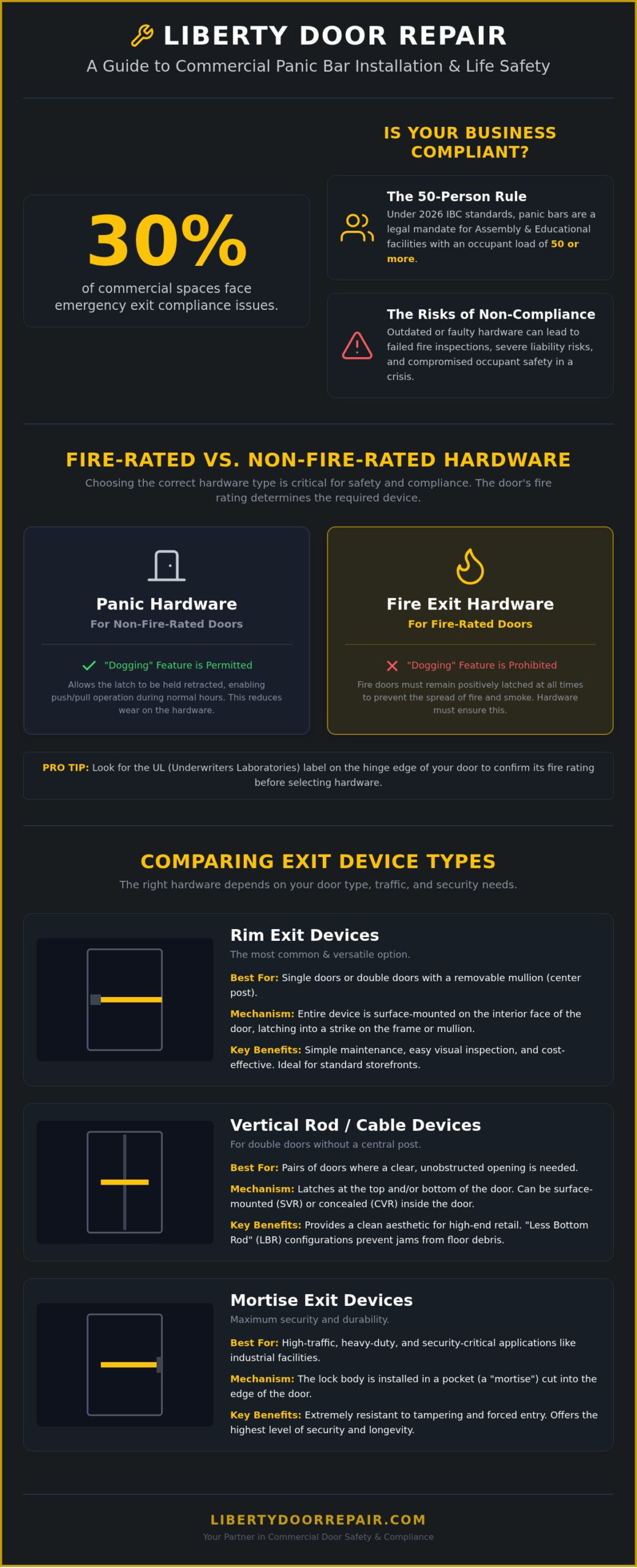
Approximately 30% of commercial spaces currently struggle with emergency exit compliance, leaving business owners vulnerable to failed fire inspections and liability risks. If your Atlanta facility has an occupant load of 50 or more, professional panic bar installation for commercial doors isn’t just a hardware upgrade; it’s a legal mandate under 2026 International Building Code standards. Relying on outdated equipment or a faulty DIY setup can compromise occupant safety during a crisis. You need hardware that works every single time someone pushes that bar.
It’s stressful to manage complex fire codes while trying to keep your building secure from unauthorized entry. You likely recognize that safety is your top priority, yet the technical requirements for ADA and NFPA compliance often feel like a moving target. This guide helps you master the essentials of modern exit devices. You’ll learn how to ensure your business meets all 2026 life safety codes with professional installation. We’ll preview the specific hardware types that withstand heavy traffic and explain how to maintain a secure, compliant facility for years to come.
Key Takeaways
- Identify the specific 2026 occupancy thresholds that trigger mandatory life safety hardware requirements for your facility.
- Compare rim, vertical rod, and mortise exit devices to select the most durable hardware for your specific door material.
- Master the technical requirements of panic bar installation for commercial doors to ensure flawless operation and fire code compliance.
- Explore how to integrate alarmed exit devices with access control systems to stop unauthorized entry without blocking emergency exits.
- Gain peace of mind by working with local, AAADM-certified technicians who understand Metro Atlanta’s unique building safety regulations.
Why Panic Bar Installation is Mandatory for Commercial Doors
Panic hardware serves one primary purpose: saving lives. Often referred to as a Crash bar (panic exit device), this hardware allows occupants to exit a building instantly by simply pushing a horizontal bar. During a fire or crowd surge, standard door knobs or levers become death traps. Professional panic bar installation for commercial doors ensures that your exits function under pressure without requiring specialized knowledge or effort from the user. It’s the difference between a safe evacuation and a tragedy.
The National Fire Protection Association (NFPA) publishes the Life Safety Code, known as NFPA 101. This code governs your hardware choices based on how your building is used. Specifically, Assembly, Educational, and High-Hazard occupancies must utilize these devices. Ignoring these mandates leads to more than just a failed fire inspection. Non-compliance exposes your business to massive legal liability and potential closure by local authorities. You don’t want to risk your reputation or your occupants’ safety on non-compliant hardware.
The 50-Person Rule and Occupancy Loads
Occupancy load determines your legal requirements. You calculate this by dividing the floor area by the occupant load factor assigned to your business type. In Metro Atlanta, fire marshals in Fulton, Cobb, and Gwinnett counties strictly enforce these calculations during annual inspections. According to the International Building Code (IBC), panic hardware is required for Assembly and Educational occupancies with an occupant load of 50 or more. If your space fits this criteria, proper panic bar installation for commercial doors is a non-negotiable safety step. Don’t wait for a citation to address your building’s egress needs.
Fire-Rated vs. Non-Fire-Rated Exit Devices
Not all exit devices are the same. “Panic Hardware” is designed for life safety on non-fire-rated doors. “Fire Exit Hardware” is specifically tested and listed for use on fire-rated door assemblies. You can’t use the standard “dogging” feature, which holds the latch retracted for easy entry, on a fire-rated door. Fire doors must remain latched to prevent the spread of smoke and flames. Look for the UL label on the hinge edge of your door to confirm its fire rating before selecting your hardware. Choosing the wrong device can void your fire door’s certification and compromise the entire building’s safety. Our technicians ensure every component matches your door’s specific rating.
Comparing Exit Device Types: Rim, Vertical Rod, and Mortise
Choosing the right hardware architecture is critical for long-term performance. You must balance the door material with the expected traffic volume and security needs. Professional panic bar installation for commercial doors requires matching the device to the specific door type, whether it’s hollow metal, solid wood, or narrow-stile aluminum. Referencing the Codes to Know for Panic Hardware ensures your selection aligns with both IBC and local Atlanta fire codes. The architecture you choose determines how the door latches and how much maintenance it will require over its lifespan.
Rim Exit Devices: The Standard for Single Doors
These are the most common choice for single doors in Marietta and Decatur. The entire mechanism is surface-mounted on the interior face of the door. This design simplifies maintenance and allows for quick visual inspections. For double-door entries, rim devices often pair with a removable mullion. This central post provides a secure strike point for both doors while remaining easy to remove when you need to move large equipment through the opening. Their versatility makes them a go-to option for standard storefronts.
Vertical Rod and Cable Devices for Double Doors
Double doors without a central mullion require vertical rod or cable systems. Surface Vertical Rods (SVR) are visible on the door face, making them easier to adjust. Conversely, Concealed Vertical Rods (CVR) hide the rods inside the door. This is the preferred look for high-end retail in Alpharetta and Brookhaven. Many business owners now opt for “Less Bottom Rod” (LBR) configurations. Removing the bottom rod prevents malfunctions caused by floor dirt or shifting thresholds, which are common issues in older buildings. These devices require precise tensioning to ensure the top and bottom latches release simultaneously.
Mortise Exit Devices for Maximum Security
Mortise hardware offers the highest level of security and durability. The locking mechanism sits inside a pocket cut into the door’s edge. This makes the hardware extremely resistant to tampering and heavy-duty use in industrial settings. Because the installation involves complex machining, professional alignment is non-negotiable. A slight misalignment can cause the latch to bind, creating a safety hazard. If you need help choosing the right architecture, our technicians provide expert panic bar installation for commercial doors to keep your property secure and compliant.
The Professional Panic Bar Installation Process
Precision is the foundation of every successful installation. While many online guides suggest a simple DIY approach, professional panic bar installation for commercial doors requires a level of accuracy that standard tools can’t always achieve. Our technicians use specialized equipment like cobalt bits for hardened steel and precision templates for aluminum storefronts. A minor error of just 1/8th of an inch can prevent the latch from engaging properly. This compromises your building’s security and puts you at risk during an emergency.
Step 1: Site Assessment and Hardware Selection
We begin by measuring the door’s stile width and thickness. This ensures the hardware fits the frame without overlapping glass or interfering with the door’s structural integrity. We also match the finish to your existing hardware; common choices include US32D (satin stainless steel) or US28 (satin aluminum). Before drilling, we verify the door’s fire rating to ensure we use the correct fire-rated hardware. Selecting the wrong device for a fire-rated door is a common mistake that can lead to expensive code violations.
Step 2: Precision Mounting and Alignment
Standard mounting height typically falls between 40 and 41 inches from the finished floor. For hollow metal doors, we drill and tap for through-bolts or sex bolts to ensure the hardware stays secure under heavy use. Proper strike plate alignment is the most frequent point of failure in DIY installs, often leading to doors that won’t latch or require excessive force to open. Adhering to building and fire safety codes requires that the exit device operates flawlessly with a single motion.
Step 3: ADA and Life Safety Testing
The final stage involves rigorous testing. We use a force gauge to ensure the push bar requires 5 pounds of pressure or less to operate, meeting strict ADA standards. We also check the “deadlocking” function to ensure the latch cannot be retracted from the outside with a tool. This level of detail is a core part of our commercial door repair atlanta services. For non-fire-rated doors, we also configure the “dogging” feature. This allows you to keep the latches retracted during business hours, reducing hardware wear and allowing for easy customer entry.
Enhancing Security: Alarms and Access Control Integration
Every facility manager faces the “Exit Only” dilemma. You must provide an immediate path out during an emergency, yet back doors are often magnets for theft and unauthorized entry. Professional panic bar installation for commercial doors solves this by blending life safety with active security measures. Modern devices don’t just latch; they communicate with your building’s security ecosystem. This integration ensures that your property remains secure without violating strict fire marshal requirements.
Alarmed exit devices provide a loud audible warning the moment the bar is depressed. This deterrent is vital for warehouses and retail stockrooms where “push and run” theft is common. For high-security zones, we integrate these bars with your fire alarm system. This ensures the doors unlock automatically when the building alarm is triggered, maintaining compliance without sacrificing daily security. Modern electrified hardware also supports touchless entry, which is increasingly common in 2026 office environments.
Electrified Trim and Keyless Entry
Electrified hardware allows you to control access from the outside while maintaining free egress from the inside. You must choose between fail-safe and fail-secure configurations. Fail-safe hardware unlocks when power is lost, which is standard for many fire-rated openings. Fail-secure hardware stays locked from the outside during a power outage, protecting your inventory. We often pair these with RFID or card readers to streamline employee movement while keeping the exterior secure. Explore our full range of access control solutions to see how these systems integrate with your existing infrastructure.
Delayed Egress and Alarmed Hardware
Delayed egress is a specialized security feature legal in many Georgia retail environments. When someone pushes the bar, a 15-second delay timer begins before the door actually opens. This window gives your security team time to respond to an unauthorized exit attempt. These systems must include specific signage and be tied directly into the fire alarm to release instantly during a real emergency. To keep these systems reliable, regular maintenance is required. Replace batteries in standalone units every six months and test the delay function monthly to ensure the timer hasn’t drifted. If your current security setup feels vulnerable, contact us for professional panic bar installation for commercial doors that balances safety with loss prevention.
Expert Panic Bar Services in Metro Atlanta
Experience isn’t just a number; it’s a guarantee of safety. With over 30 years in the industry, we’ve seen every hardware failure imaginable. Our service area spans the entire Metro Atlanta region, from Marietta storefronts to Alpharetta office parks. We specialize in panic bar installation for commercial doors, ensuring every exit device we touch meets the highest standards of durability. Our AAADM-certified technicians handle complex integrations for both automatic and manual hardware. This provides a level of expertise that e-commerce parts sellers simply cannot match. You need a partner who understands the local environment and the specific demands of Georgia’s climate on door alignment.
Local Knowledge of Georgia Fire Codes
Georgia fire codes vary by municipality. Fire marshals in Roswell, Johns Creek, and Sandy Springs have specific expectations for egress hardware. We stay current with the 2026 amendments to the Life Safety Code to prevent your business from facing costly fines. Our team doesn’t just install hardware; we conduct thorough code-compliance audits to identify vulnerabilities before the inspector arrives. This proactive approach saves you time and stress. Learn more about our specialized fire door services to ensure your entire opening meets local regulations and safety mandates.
Professional Repair vs. Full Replacement
Not every malfunctioning exit device requires a total overhaul. However, specific signs indicate your panic bar needs immediate attention. If the bar is sagging, sticking, or failing to latch securely, it’s a liability. We assess whether a professional repair can restore function or if it’s more cost-effective to upgrade. Replacing outdated hardware with modern Grade 1 devices is often the smarter long-term investment. These heavy-duty devices are built for millions of cycles. They provide superior resistance to the wear and tear of high-traffic environments. Don’t leave your building’s safety to chance. Contact Liberty Door Repair for a professional panic bar installation quote today and secure your facility with confidence.
Future-Proof Your Building’s Safety and Compliance
Protecting your occupants requires more than just high-quality hardware; it demands precision and deep knowledge of evolving 2026 life safety codes. You now understand how the right choice between rim, vertical rod, or mortise devices impacts both your daily operations and emergency readiness. By integrating alarms and access control, you can effectively stop theft without compromising the life-saving function of your exit doors. These systems provide a critical balance between restricted entry and free egress.
Professional panic bar installation for commercial doors is the only way to ensure your facility remains fully compliant with NFPA 101 and ADA standards. Our AAADM-certified technicians bring over 30 years of local experience to every project across Metro Atlanta. We help you navigate complex fire marshal requirements and provide the dependable expertise your business deserves. Secure Your Business with Professional Panic Bar Installation today. Taking these steps now gives you the peace of mind that your building is safe, secure, and ready for any inspection.
Frequently Asked Questions
What is the difference between a panic bar and a fire exit device?
Panic hardware is designed for life safety on non-fire-rated doors. Fire exit hardware is a specialized version tested for use on fire-rated door assemblies to prevent the spread of smoke and flames. Unlike standard panic hardware, fire exit devices cannot include a dogging feature that holds the latch retracted. Professional panic bar installation for commercial doors requires verifying your door’s fire rating to ensure the correct hardware is applied for your specific safety needs.
Does my small business in Atlanta legally require a panic bar?
Your business legally requires panic hardware if it has an occupancy load of 50 or more people. This applies to Assembly, Educational, and High-Hazard occupancies in cities like Marietta and Sandy Springs. Local fire marshals strictly enforce these codes during annual inspections. If your space meets these criteria, installing compliant hardware is mandatory to avoid failed inspections and potential legal liability. We recommend a professional audit to determine your specific building requirements.
Can I install a panic bar on a glass storefront door?
Yes, you can install panic bars on glass storefront doors using narrow-stile hardware. These doors require specialized rim exit devices that fit the slim aluminum frame without obstructing the glass. Precision is vital because there is very little room for error when drilling into aluminum stiles. Our technicians use specific templates and tools to ensure the hardware remains secure and functional while maintaining the clean, modern aesthetic of your Brookhaven or Alpharetta storefront.
How much does professional panic bar installation cost in Metro Atlanta?
The cost for panic bar installation varies significantly based on the hardware grade and your door’s material. Grade 1 heavy-duty devices designed for high-traffic environments carry a different price point than standard economy models. Additional factors include whether you need fire-rated hardware or integration with an existing access control system. For an accurate quote tailored to your Atlanta facility, we recommend a professional site evaluation to assess your specific door configuration and compliance needs.
What is ‘dogging’ on a panic bar and is it always allowed?
Dogging is a feature that allows you to hold the latch in a retracted position using a key or hex tool. This permits users to push or pull the door open without depressing the bar, which is convenient during high-traffic business hours. However, dogging is strictly prohibited on fire-rated doors. Fire doors must remain latched at all times to contain fire and smoke. Our experts ensure your hardware selection matches your door’s legal requirements.
How often should commercial exit devices be inspected and maintained?
You should perform a basic functional test on your exit devices every month to check for smooth operation and proper latching. Professional inspections are recommended at least once a year to verify that all components meet current NFPA 101 standards. High-traffic locations in areas like Decatur or Roswell may require more frequent service. Regular maintenance prevents hardware failure and ensures your building remains compliant with life safety codes during a surprise fire inspection by local authorities.
Can panic bars be integrated with my existing keyless entry system?
Yes, panic bars can be integrated with keyless entry systems through electrified trim or strikes. This allows your employees to use RFID cards or key fobs for entry while maintaining free egress from the inside as required by law. Integrating access control with panic bar installation for commercial doors enhances your overall security ecosystem. Our AAADM-certified technicians specialize in these complex setups, ensuring your security hardware communicates effectively with your building’s fire alarm and monitoring systems.
What should I do if my panic bar is sticking or hard to push?
If your panic bar is sticking or hard to push, you must address the issue immediately. This is a significant life-safety violation that could prevent a safe evacuation during an emergency. Common causes include door misalignment, worn internal springs, or shifting thresholds. Don’t attempt a DIY fix on fire-rated hardware, as this can void the door’s certification. Contact a professional technician to diagnose the problem and perform the necessary repairs to restore smooth, reliable operation.