

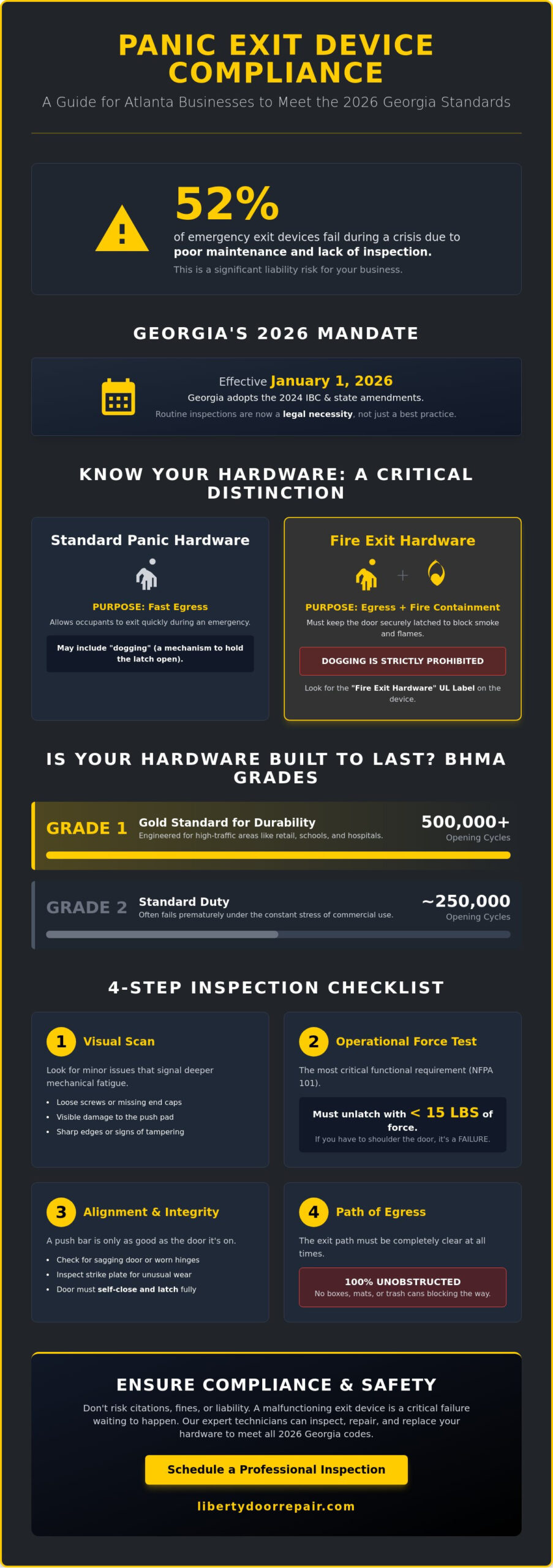
Did you know that 52% of emergency exit devices that fail during a crisis do so because of poor maintenance? For Atlanta business owners, this isn’t just a technicality; it’s a significant liability risk. With the state’s adoption of the 2024 International Building Code and Georgia-specific amendments effective January 1, 2026, the stakes for your facility have never been higher. Routine panic exit device inspection and testing is no longer a best practice. It’s a legal necessity to ensure your doors perform under pressure and pass fire marshal inspections without a single citation.
You probably already know that keeping up with shifting safety standards like the ANSI/BHMA A156.3-2025 can feel like a full-time job. It’s common to feel overwhelmed by the technical differences between fire-rated hardware and standard panic bars. This guide simplifies the process so you can protect your occupants and your bottom line. We will walk you through the latest 2026 standards, explain critical testing procedures, and provide clear criteria for when you should repair versus replace your hardware.
Key Takeaways
- Understand how the 2024 IBC and NFPA 101 updates impact your facility’s safety requirements starting in 2026.
- Use our comprehensive checklist to perform a visual and functional panic exit device inspection and testing routine that meets code.
- Learn to identify common mechanical failures like binding and “bouncing” latches that often cause fire inspection citations.
- Differentiate between standard panic hardware and fire-rated exit devices to ensure you have the correct level of protection.
- Find out when to repair your existing hardware versus when a full replacement is necessary for life-safety compliance.
Understanding Panic Hardware Standards (ANSI/BHMA A156.3)
Compliance starts with knowing exactly what is installed on your door. The ANSI/BHMA A156.3-2025 standard is the current benchmark for performance and durability. Adhering to these standards is a core part of professional panic exit device inspection and testing. If your hardware doesn’t meet these rigorous requirements, your facility is at risk during a fire marshal walkthrough or, worse, during an actual emergency.
Panic Hardware vs. Fire Exit Hardware
It’s easy to confuse these two, but the differences are life-saving. A standard panic exit device allows fast egress during an emergency. However, “Fire Exit Hardware” must also keep the door closed against the pressure and heat of a fire. You must check for the UL label on the side of the device or the door edge. Should the stamp say “Fire Exit Hardware,” it’s been tested for fire resistance and lacks any manual locking “dogging” mechanism.
Fire-rated openings must be self-latching to contain smoke and flames. This is why dogging devices, which use a hex key to keep the push bar retracted, are strictly prohibited on fire-rated doors. If an inspector finds a fire door that won’t latch because of a dogging feature, you’ll face immediate citations. Mechanical differences also include the internal components; fire-rated hardware is designed to remain latched even when exposed to extreme temperatures that would melt standard springs.
The Significance of BHMA Grade Levels
Durability isn’t just about brand names; it’s about BHMA grades. These grades tell you how many times a door can open before it’s likely to fail. Grade 1 hardware is the industry gold standard, engineered to withstand over 500,000 opening and closing cycles. For high-traffic Metro Atlanta businesses, such as retail storefronts or educational facilities, Grade 2 hardware often fails prematurely under the stress of constant use.
Grade 1 devices provide the heavy-duty components needed to handle constant abuse without mechanical binding. During your next panic exit device inspection and testing, verify the grade of your hardware. These heavy-duty devices are built for maximum durability and meet higher force requirements for latch release. Investing in higher-grade hardware reduces the frequency of repairs and ensures your exit points remain functional for years. Atlanta businesses face high foot traffic and varying climate conditions; choosing the right grade is the first step toward long-term safety.
Comprehensive Testing Checklist for Commercial Exit Devices
Fire marshals in Metro Atlanta don’t just look for the presence of a push bar; they look for proof of performance. A routine panic exit device inspection and testing ensures your hardware functions exactly as intended during a crisis. Start with a thorough visual scan. Look for loose screws, missing end caps, or visible damage to the push pad. These minor issues often signal deeper mechanical fatigue that could lead to a total failure when you least expect it. Check the finish for sharp edges or signs of tampering that might hinder a quick escape.
The Operational Force Test
The most critical functional requirement involves the 15-pound force rule. According to the NFPA 101 – Life Safety Code, a person shouldn’t need more than 15 pounds of force to release the latch. Test this by applying pressure at various points along the actuating bar. It’s not enough for the bar to move; the latch must retract fully and smoothly. If you have to “shoulder” the door to get it open, the device has failed the test and needs immediate attention.
Alignment and Hardware Integrity
A push bar is only as effective as the door it’s mounted on. Check the strike plate for unusual wear patterns or deep grooves. These often indicate that the door is sagging or the hinges are worn out. Inspect the pivots and hinges for fluid leaks or loose pins. If the door doesn’t close and latch on its own from any open position, your fire-rated opening is compromised. Metal fatigue in the internal springs can also cause a “spongy” feeling in the push pad, suggesting the mechanism is nearing its end.
Clear the path. The “path of egress” must remain completely unobstructed at all times. This means no storage boxes, floor mats, or trash cans can block the exit. Once your physical check is complete, document everything. Create a log that includes the date, the specific door ID, and the results of the force test. Performing your own panic exit device inspection and testing creates a paper trail that demonstrates your commitment to safety and helps you avoid costly citations during a review. If your testing reveals a bar that sticks or a door that won’t latch, scheduling professional panic device services is the best way to restore your facility’s safety.
Common Panic Bar Failures and Maintenance Solutions
Atlanta’s intense humidity and high pollen counts often lead to premature hardware degradation. Corrosive air can cause internal springs to seize, leading to mechanical binding. When a push bar feels “stuck” or requires excessive force to operate, it’s a clear indicator that your panic exit device inspection and testing schedule has fallen behind. These mechanical failures aren’t just inconvenient; they often violate the strict panic hardware code requirements that keep your building legal and your occupants safe.
Latching issues are another frequent headache for Metro Atlanta facility managers. If a door “bounces” open or fails to secure properly, the strike plate is likely misaligned. This often happens because of building settlement or heavy foot traffic. Surface-mounted vertical rods are particularly prone to this, as the top and bottom latches must move in perfect synchronization. If one rod is slightly out of adjustment, the entire door remains vulnerable, compromising both security and fire safety.
Troubleshooting Latches and Strikes
Maintenance begins with the right materials. Don’t use wet, oil-based lubricants on internal door hardware. These attract dust and debris, creating a sticky paste that eventually gums up the mechanism. Instead, use a dry graphite or Teflon-based spray to keep components moving freely. For surface-mounted devices, check the vertical rod guides. If the rods are bent or loose, the door won’t latch at the top or bottom as required. Sometimes, a simple shim behind the strike plate can restore proper engagement. However, if the metal shows deep grooves or signs of fatigue, a full replacement is the only dependable option.
Integrating with Access Control Systems
Modern security often involves electronic strikes or delayed egress systems. These components add a layer of complexity to your safety plan. You must ensure that every electronic component releases immediately during a fire alarm or power loss. Testing these systems requires specialized knowledge of how the hardware interacts with the building’s fire panel. Faulty power supplies or frayed wiring can prevent a door from opening during an emergency, even if the mechanical push bar works perfectly.
If you’re upgrading your facility, explore our access control solutions to ensure your security doesn’t compromise your life-safety compliance. Regular panic exit device inspection and testing must include a full cycle test of these electronic integrations. This guarantees they fail-safe as required by Georgia law, providing peace of mind that your technology won’t become a barrier during a crisis.
Fire Code Compliance in Metro Atlanta (NFPA 101 & IBC)
Georgia businesses must adhere to the 2024 International Building Code (IBC) with state-specific amendments. These regulations became mandatory for all new permit applications on January 1, 2026. Additionally, the Georgia State Fire Marshal’s Office enforces the 2024 edition of the NFPA 101 Life Safety Code. Staying compliant requires more than just installing a push bar. You must ensure that every panic exit device inspection and testing cycle meets these updated standards to avoid legal complications and safety failures.
While NFPA 80 mandates a formal annual inspection, monthly visual checks are a best practice for high-traffic Atlanta facilities. These frequent reviews help you catch mechanical issues before they lead to a failed fire marshal visit. Documentation is the backbone of compliance. If you cannot produce a signed maintenance log during an inspection, you risk being cited for non-compliance regardless of how well your hardware actually functions.
When is Panic Hardware Mandatory?
Occupancy load is the primary factor for hardware requirements in Metro Atlanta. In Georgia, panic hardware is generally mandatory for any assembly or educational occupancy with a load of 50 or more people. High-hazard areas require these devices regardless of the occupant count. The actuating portion of the bar must be at least half the width of the door leaf and mounted between 34 and 48 inches from the floor. To ensure your entire facility meets these rigorous standards, consult our guide on fire door services for full compliance details.
Preparing for a Fire Marshal Inspection
Fire marshals in Atlanta look for specific proof of maintenance. They will examine your door’s closing speed, latching force, and the physical condition of the hardware. Common citations include blocked egress paths, painted-over UL labels, and latches that stick due to grime. Organizing your maintenance logs and inspection certificates beforehand demonstrates a proactive approach to safety.
Relying on AAADM-certified technicians ensures your hardware is tested with precision. These specialists understand the nuances of the 2026 code updates and can identify subtle failures that an untrained eye might miss. Professional certification provides a layer of liability protection that DIY checks simply cannot offer. If you are unsure about your current hardware status, scheduling a professional panic exit device inspection and testing is the most effective way to secure a passing grade.
The consequences of ignoring these codes are severe. You could face thousands of dollars in fines or even a total facility shutdown. More importantly, if an emergency occurs and your hardware fails, your business faces massive liability concerns. Approximately 52% of exit devices that fail during fires do so because of poor maintenance. Don’t let your facility become part of that statistic.
Professional Panic Device Services by Liberty Door Repair
Liberty Door Repair has served North Georgia businesses since 2015. We understand that life-safety compliance isn’t a suggestion; it’s a fundamental requirement for your operation. Our AAADM-certified technicians provide the precision required for panic exit device inspection and testing. We serve a wide range of commercial clients from Alpharetta to Marietta, delivering fast and dependable results. If your hardware is sticking or failing to latch, our team provides the immediate expertise needed to restore safety and compliance.
Experience matters when dealing with the 2026 code updates. An untrained eye might miss subtle signs of metal fatigue or internal spring failure. Our technicians use their decades of local knowledge to identify these issues before they lead to fire marshal citations. We arrive prepared to solve problems on the spot. This proactive approach minimizes your liability and ensures your occupants have a clear, functional path of egress at all times.
Expert Repair and Installation
We specialize in the complex mechanics of modern exit hardware. Our team handles the precision installation of rim devices, surface vertical rods, and mortise hardware. We work across all architectural styles, including aluminum storefronts, hollow metal fire doors, and heavy-duty glass entries. Sourcing the right components is critical for the longevity of your high-traffic openings. We maintain a robust inventory of high-quality door parts & replacements for all major industry brands. This allows us to perform immediate hardware replacements to bring your facility back into compliance without delay.
Our repair services address the root causes of hardware failure. We don’t just fix the symptom; we ensure the door, frame, and hinges work in perfect harmony. This holistic approach prevents recurring issues like mechanical binding or latch “bounce.” Whether your facility requires Grade 1 hardware for a busy retail entrance or specialized fire-rated devices for a school, we provide the durable solutions your business demands.
Schedule Your Inspection Today
Our service area covers the entire Metro region, including Atlanta, Roswell, Sandy Springs, and all surrounding suburbs. We offer comprehensive solutions that address the specific mechanical and electronic integration issues discussed throughout this guide. Don’t wait for a surprise inspection or a liability event to occur. Request a detailed quote for commercial door repair in Atlanta to secure your building today. Our panic exit device inspection and testing process is thorough, documented, and designed to give you total peace of mind.
Take action before minor hardware issues become major legal problems. We value speed and effectiveness above all else, ensuring your business remains open and safe. Protect your business and your people—Contact Liberty Door Repair now.
Secure Your Facility and Ensure Compliance
Maintaining code-compliant exit hardware is a continuous responsibility that directly impacts the safety of your occupants and the legality of your business. By following the 2026 updates to the IBC and NFPA 101, you can avoid the common pitfalls that lead to failed fire marshal inspections. Regular panic exit device inspection and testing is your best defense against mechanical binding, latch failures, and the significant liability risks associated with poorly maintained hardware. Proactive maintenance ensures that your life-safety systems perform exactly as intended when every second counts.
Don’t leave your facility’s safety to chance. Liberty Door Repair has served North Georgia businesses since 2015 and AAADM-certified technicians to every project. We serve over 20 cities, including Marietta, Roswell, and Alpharetta, providing the dependable expertise you need for immediate compliance. Schedule your professional panic device inspection with Liberty Door Repair today to protect your property and your people. Taking these steps now ensures your doors remain a reliable path to safety during any emergency.
Frequently Asked Questions
How often should panic exit devices be tested?
NFPA 80 requires a formal inspection and functional test at least once every year. However, high-traffic Atlanta facilities should perform monthly visual checks to catch loose screws or alignment issues early. Routine panic exit device inspection and testing ensures that small mechanical problems don’t turn into major fire code violations during a surprise walkthrough.
Can I use a standard deadbolt on a door with panic hardware?
No, you cannot install a separate deadbolt on a door required to have panic hardware. Life safety codes require that a door be opened with a single motion from the inside. Adding a deadbolt creates a “double action” requirement, which is illegal for emergency egress. This setup will result in an immediate citation from the fire marshal.
What is the difference between a panic bar and a fire exit device?
A panic bar is designed solely for rapid egress in an emergency. A fire exit device is fire-rated and lacks any “dogging” mechanism that would keep the latch retracted. Fire-rated doors must remain latched to contain smoke and flames. Look for a UL label on the device to confirm if it’s rated for fire openings.
Does my small retail shop in Atlanta need panic hardware by law?
Requirement depends on your occupancy load and usage type. In Georgia, panic hardware is generally mandatory for assembly or educational occupancies with a load of 50 or more people. High-hazard environments require these devices regardless of the shop’s size. Check your specific certificate of occupancy to determine your load requirements.
Why is my panic bar making a grinding noise when pushed?
Grinding usually indicates metal-on-metal friction caused by worn internal springs or dirt buildup. This is a sign of mechanical fatigue that could lead to the latch seizing completely. You should schedule a panic exit device inspection and testing immediately to determine if the internal components need lubrication or a full hardware replacement.
What happens if a fire marshal finds a “dogged” fire door?
The fire marshal will issue a citation and likely a fine. Fire doors must be self-latching to prevent the spread of fire throughout the building. Using a hex key to keep the latch retracted on a fire-rated door is a serious safety violation. You must remove the dogging feature or replace the hardware with a code-compliant fire exit device.
Can Liberty Door Repair service panic bars on automatic doors?
Yes, our AAADM-certified technicians specialize in servicing panic hardware on automatic and sliding door systems. These setups require a deep understanding of how mechanical latches integrate with electronic sensors and operators. We ensure that the door breaks away properly during an emergency and that all electronic locks release as required by Georgia law.
Are there specific ADA requirements for panic hardware height?
Yes, the actuating portion of the panic bar must be mounted between 34 and 48 inches above the finished floor. This height ensures the device is accessible to individuals using wheelchairs or those with limited mobility. Additionally, the bar must be operable with one hand and require no more than 15 pounds of force to release the latch.