

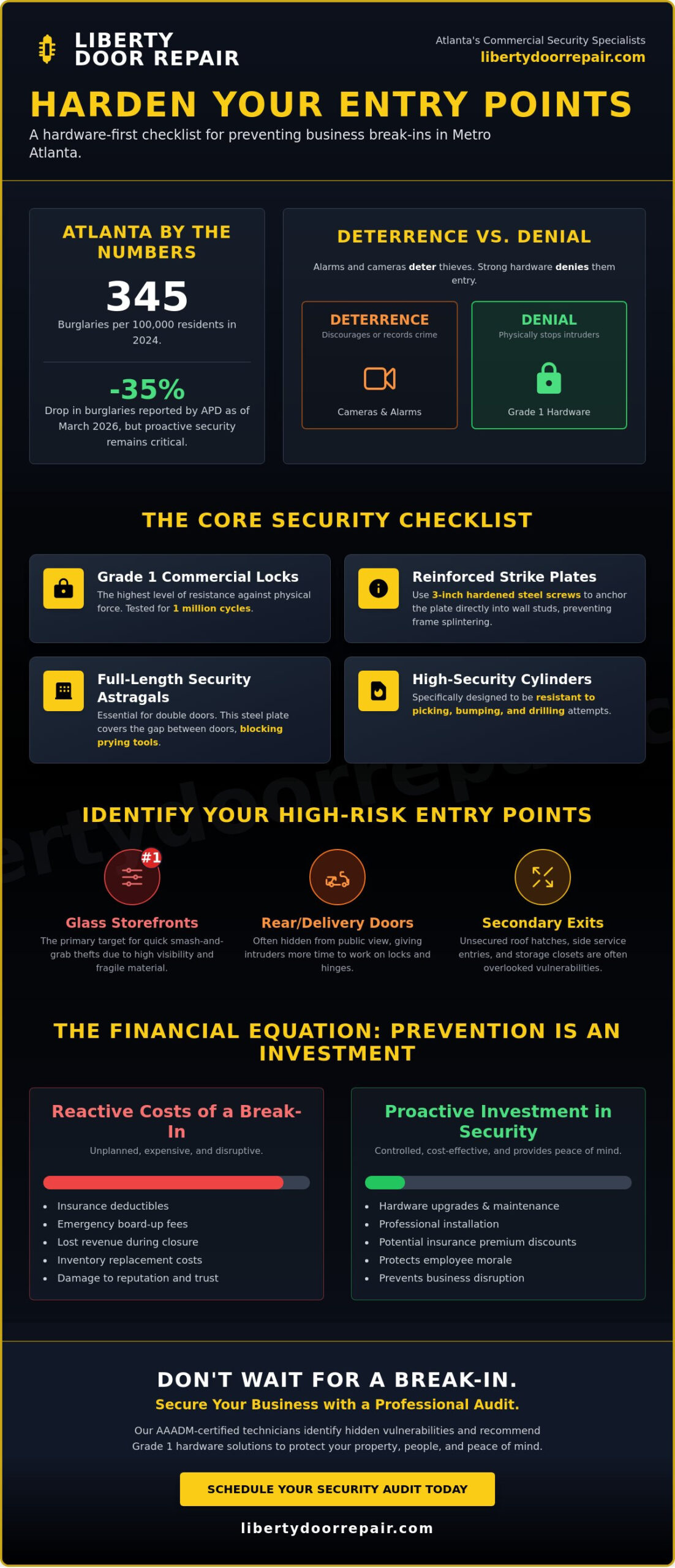
Your expensive alarm system won’t stop a smash-and-grab if your storefront door frame is the weakest link in the building. While the Atlanta Police Department reported a 35% drop in burglaries as of March 13, 2026, the 2024 burglary rate remained at 345 per 100,000 residents. Most intruders don’t bypass high-tech sensors; they exploit aging or low-quality door hardware. If you’re prioritizing preventing business break-ins atlanta, you need to look at the steel and glass standing between a thief and your inventory.
It’s natural to feel anxious about employee safety or property damage, especially when you’re unsure which security upgrades are worth the cost. We agree that a “wait and see” approach is too risky for your bottom line. This guide gives you a clear, hardware-focused checklist to harden your Metro Atlanta business against forced entry. You’ll learn how to secure your entry points with professional-grade solutions that provide peace of mind and can even help lower your insurance premiums.
Key Takeaways
- Learn why Grade 1 commercial hardware and reinforced strike plates are the most effective barriers against forced entry.
- Discover the most reliable strategies for preventing business break-ins atlanta by hardening storefront glass and secondary exits.
- Understand how to use environmental design to eliminate blind spots in alleys and parking lots to deter smash-and-grab attempts.
- Identify hidden vulnerabilities like worn pivots and faulty closers that compromise your building’s physical security.
- Find out why a professional security audit by AAADM-certified technicians is a critical step for modern business protection.
The State of Commercial Security in Metro Atlanta
Atlanta is seeing a significant shift in crime trends. As of March 13, 2026, the Atlanta Police Department reported a 35% drop in burglaries compared to the previous year. While this decline is encouraging, the 2024 burglary rate of 345 incidents per 100,000 residents proves that risk remains a reality. Whether your shop is in the heart of the city or in growing suburbs like Alpharetta and Marietta, security requires a proactive approach. Most local smash-and-grabs are crimes of opportunity. If a thief sees a weak frame or a loose latch, they’ll take it.
There is a critical difference between deterrence and denial. Cameras and alarm systems are forms of deterrence. They might discourage a criminal or record the event, but they don’t physically stop an intruder. Denial is the practice of hardening your entry points so a break-in becomes physically impossible or too time-consuming to attempt. This is a core principle of Crime Prevention Through Environmental Design (CPTED). If your doors hold for those first sixty seconds, most intruders will give up and move on.
A break-in causes damage far beyond stolen inventory. It shatters employee morale and erodes customer trust. Staff members feel vulnerable during late shifts or early openings. Customers notice boarded-up glass and may perceive your neighborhood as unsafe. Successfully preventing business break-ins atlanta is about protecting your reputation and your team as much as your bottom line. We have seen how a single incident can disrupt a local business for weeks. It’s better to invest in the right hardware now than to manage a crisis later.
High-Risk Entry Points for Atlanta Businesses
Thieves look for the path of least resistance. In Metro Atlanta, glass storefront doors remain the number one target for quick-entry theft. They provide high visibility for the thief and a fragile barrier for the owner. Rear delivery doors and loading docks in industrial areas like Norcross are also high-risk zones. These exits are often hidden from public view, giving intruders more time to work on a lock. Don’t forget about unsecured roof hatches and side service entries. If it’s a door, it’s a target.
The Cost of a Break-In vs. The Cost of Prevention
The financial math of a break-in is brutal. Between insurance deductibles, emergency board-up fees, and lost revenue while you clean up, the costs add up quickly. Proactive commercial door repair atlanta is a smarter investment. Regular maintenance ensures your locks, hinges, and closers are functioning at peak strength. Many insurance providers even offer premium incentives for businesses that use certified security hardware and professional installation services. Spend a little on your hardware today to save thousands tomorrow.
The ‘Hardware-First’ Security Checklist: Hardening Your Entry Points
Physical security starts with the quality of your hardware. Standard residential locks won’t hold up against a determined intruder. You must use Grade 1 commercial locks for preventing business break-ins atlanta. These locks are tested for one million cycles and provide the highest level of resistance against physical force. Use a comprehensive security checklist to ensure every entry point meets this standard. Don’t overlook the strike plates and hinges. Use three-inch hardened steel screws to anchor strike plates directly into the building’s wall studs. This prevents the door frame from splintering if someone tries to kick it in.
Double doors are particularly vulnerable because of the gap between them. Install full-length security astragals to cover this opening. This simple steel plate prevents a thief from sliding a prying tool between the doors. You should also upgrade to high-security cylinders. These components are specifically designed to resist picking, bumping, and drilling. If a lock can be drilled out in seconds, the rest of the door’s strength doesn’t matter. If your hardware is aging, a professional security audit can identify these weak points before they are exploited.
Locking Systems and Deadbolts
Aluminum storefront doors require specialized hook bolts. These bolts swing into the frame and lock deep, making it nearly impossible to pry the door away from the jamb. For modern tracking and restricted entry, many owners are switching to access control solutions. These systems eliminate the risk of lost keys. If you stick with traditional keys, use restricted keyways. This ensures that employees cannot duplicate keys at a local hardware store without your explicit authorization.
Panic Bars and Exit Devices
Your security strategy must comply with the Georgia-adopted International Building Code (IBC) and NFPA 101: Life Safety Code. Rear metal doors should be equipped with heavy-duty rim exit devices. These provide maximum latching strength while allowing for immediate egress during an emergency. AAADM-certified technicians must install automatic exit devices to ensure the hardware meets strict safety standards and functions correctly under pressure. Choosing the right panic bar ensures your building stays secure from the outside without trapping anyone inside during a fire.
Storefront Glass vs. Hollow Metal Doors: Choosing the Right Protection
Choosing the right material for your entry points is a strategic decision. Glass storefronts offer visibility but are naturally more vulnerable to blunt force. Solid steel doors provide maximum resistance but lack the aesthetic appeal required for retail. When you’re prioritizing preventing business break-ins atlanta, you must evaluate each opening based on its specific risk level and function. If your current frames are warped or the door is sagging, even the best hardware won’t save you. In these cases, a full commercial door replacement is the most cost-effective way to secure your perimeter.
Standard tempered glass can be shattered in seconds with a simple punch tool. To harden these entryways, many owners are turning to advanced security glazing solutions. These include heavy-duty security films or polycarbonate shields that absorb impact and prevent the glass from falling out of the frame. This denial strategy forces an intruder to spend several minutes trying to breach a single door. Most criminals will flee rather than risk the extra time required to break through reinforced glazing.
Storefront Vulnerabilities and Solutions
High-traffic retail areas like Buckhead often face smash-and-grab threats. Beyond the glass itself, you should audit your hinges. Standard butt hinges can be a weak point if the pins are exposed. Continuous geared hinges distribute the door’s weight along the entire length of the frame. This prevents the sagging that leads to latch failure. Security grilles or roll-down gates provide an extra layer of physical protection after hours, though you should check local zoning ordinances before installation.
Hollow Metal Doors for Back-of-House
For rear exits and delivery docks, hollow metal doors are the industry standard. For true security, stick with 16-gauge steel. Thinner gauges are too easy to dent or pry. The internal core also matters. Honeycomb cores offer structural rigidity, while polystyrene cores provide better insulation. A critical but often ignored component is the door closer. If the tension is too loose, the door might not latch fully. If it’s too tight, it may bounce open. Properly adjusted closers ensure your back-of-house stays locked 100% of the time.
Beyond the Door: Environmental Design and Local Atlanta Protocols
Hardening your entry points is the first step. The second is making your property an unattractive target through smart environmental design. Crime Prevention Through Environmental Design (CPTED) is a proven strategy for preventing business break-ins atlanta. It focuses on natural surveillance and territorial reinforcement. If a criminal feels they are being watched or that a property is well-maintained, they’re less likely to strike. Start with your lighting. Eliminate blind spots in alleys and parking lots with high-output LED fixtures. Shadowy corners give intruders the privacy they need to work on your rear delivery doors or loading docks.
Landscaping also plays a critical role in your building’s defense. Follow the 3-foot/7-foot rule to maintain clear sightlines. Keep all shrubs and bushes trimmed below 3 feet to prevent them from becoming hiding spots. Simultaneously, prune tree canopies so they start at least 7 feet above the ground. This creates a “window” of visibility that allows passing police patrols and neighbors to see your storefront clearly. A well-lit, visible storefront is a high-risk environment for a thief. These simple changes make it much harder for a criminal to approach your building unnoticed.
Atlanta-Specific Security Initiatives
Digital integration with local law enforcement is a powerful deterrent. You should register your business cameras with the Atlanta Police Department’s “Connect Atlanta” network. This program allows the APD to access your external feeds during an emergency, which significantly improves response times. Additionally, sign up for “NotifyATL.” This service provides real-time crime alerts for your specific ZIP code. We also recommend participating in the “Lock Hide Keep” initiative. Displaying this signage in your parking lot reminds customers to secure their valuables, which helps reduce the overall criminal activity around your premises.
Internal Protocols and Key Control
Technology and hardware only work if your team follows strict protocols. Establish a formal key management policy. Never label keys with the business name or specific door locations. For businesses with high staff turnover, we recommend installing Trilogy locks. These allow you to change access codes in seconds without the need for a locksmith. Finally, implement a nightly “Close-Down” checklist. Employees should physically check every latch, deadbolt, and panic bar before leaving. If you find a lock that isn’t catching properly, you need a trusted expert to request service immediately to restore your security.
The Liberty Advantage: Professional Hardening and Maintenance
Maintenance is the difference between a truly secure building and a target waiting to be hit. A professional security audit by AAADM-certified technicians is essential for identifying weaknesses that the untrained eye might miss. This proactive approach is a cornerstone of preventing business break-ins atlanta. We identify silent vulnerabilities like worn pivots and leaking closers before they lead to a total hardware failure. A sagging door or a closer that fails to latch properly leaves your business exposed to anyone who pulls on the handle. Our fire door services ensure your entryways provide maximum security without violating strict Georgia life-safety codes. Liberty Door Repair brings 30+ years of experience to every job site in the metro area. We’ve spent decades securing local businesses with reliable solutions that stand up to physical force.
Custom Security Solutions for Every Industry
Every business has a unique footprint and different risk levels. Retail storefronts in high-traffic shopping centers need glass hardening and reinforced frames to stop smash-and-grabs. Conversely, industrial warehouses require heavy-duty security for loading docks in Suwanee and Lawrenceville. These rear exits are often the primary targets for theft in industrial parks. Medical and professional offices have their own challenges. They require ADA-compliant secure entries that remain accessible to patients while keeping unauthorized visitors out. Our skilled technicians evaluate your specific environment to install hardware that fits your daily operations. We don’t believe in one-size-fits-all security.
Emergency Repair: Your First Line of Defense
A broken door is an invitation for opportunistic crime. When a latch doesn’t click or a hinge is bent, a criminal sees an easy entry point. If your hardware fails, it must be fixed immediately to maintain your perimeter. We stock a wide inventory of high-quality door parts & replacements to facilitate fast repairs. Using the right commercial-grade components ensures the repair lasts and the door remains hardened against prying. Don’t leave your inventory and employees at risk because of a faulty closer or a cracked frame. Request a professional security audit from Liberty Door Repair today to identify your vulnerabilities and get them fixed by a trusted expert.
Take Control of Your Storefront Security Today
Security isn’t a one-time setup; it’s an ongoing commitment to your property’s integrity. Effective preventing business break-ins atlanta requires a combination of high-grade hardware, smart environmental design, and active participation in local police programs. You’ve learned that Grade 1 deadbolts and reinforced frames are your primary defense against physical force. You also know that maintaining clear sightlines and integrating with the “Connect Atlanta” network can deter intruders before they even reach your door. These layers work together to create a formidable barrier that protects your staff and your bottom line.
Don’t wait for a compromised latch or a sagging hinge to become a costly emergency. Our skilled technicians specialize in high-security commercial hardware and bring 30+ years of Metro Atlanta experience to every inspection. As a trusted expert with AAADM-certified professionals on staff, we identify the vulnerabilities that others miss. Whether you need to reinforce a loading dock or upgrade a storefront, we provide reliable solutions that last. Secure Your Business with a Professional Audit from Liberty Door Repair to ensure your entry points remain unshakeable. You deserve the peace of mind that comes with a hardened, reliable perimeter.
Frequently Asked Questions
What is the most common way burglars break into Atlanta businesses?
Forced entry through storefront doors is the primary method used by intruders. They typically target weak latches or use prying tools to exploit gaps in double doors. While the city saw a 35% decrease in robberies in early 2026, storefronts remain vulnerable if they lack hardened hardware. Upgrading to Grade 1 deadbolts and installing security astragals are the most effective ways of preventing business break-ins atlanta.
Are security cameras enough to prevent a break-in?
Security cameras provide deterrence and evidence, but they cannot physically stop an intruder. A determined criminal can bypass a camera in seconds by wearing a mask or staying in blind spots. For true protection, you must combine digital monitoring with physical denial hardware. Hardened door frames and impact-resistant glazing ensure that even if a criminal is caught on camera, they cannot actually enter your building.
What are the best locks for commercial glass doors?
Maximum Security (MS) deadbolts and hook bolts are the industry standard for aluminum-framed glass doors. These locks utilize a long-throw bolt that pivots into the frame, making it extremely difficult to pry the door away from the jamb. We recommend choosing Grade 1 hardware tested for high-traffic use. Pairing these locks with high-security cylinders prevents common bypass techniques like lock bumping or drilling during after-hours attempts.
How can I secure my rear delivery door without violating fire codes?
Install heavy-duty panic bars or rim exit devices to secure rear doors while maintaining life-safety compliance. These devices allow for immediate egress from the inside but remain locked to outsiders. In Georgia, all commercial exit hardware must comply with NFPA 101 standards. Using a professional technician ensures that your door remains a solid barrier against theft without creating a safety hazard that could lead to fire marshal fines.
Does insurance cover business break-ins in Georgia?
Most commercial property insurance policies in Georgia cover theft and damage from break-ins, but coverage levels vary. Insurers often require proof that the business took reasonable steps to secure the premises. Installing certified hardware and maintaining a professional security audit can sometimes lead to lower premiums. Always review your specific policy to understand your deductible and the documentation required to file a successful claim after an incident.
What is ‘Connect Atlanta’ and should my business join it?
Connect Atlanta is the Atlanta Police Department’s public safety program that integrates private security cameras into a citywide network. By registering your external cameras, you give officers real-time access to video feeds during emergencies. This leads to faster response times and better suspect identification. It is a highly recommended step for any business owner looking to improve neighborhood safety and strengthen their overall security posture through 2026.
How often should I have my commercial doors inspected for security?
Schedule a professional security inspection at least once every 12 months. High-traffic doors in retail environments may require more frequent checks to identify worn pivots or leaking closers. Regular maintenance prevents small mechanical issues from turning into major security vulnerabilities. A certified technician can verify that your locking mechanisms are still meeting Grade 1 standards and that your frames haven’t shifted or warped over time.
Can I install my own high-security locks or do I need a professional?
Professional installation is necessary to ensure your hardware functions correctly and meets local building codes. Commercial doors often have complex internal mechanisms that require precise alignment to prevent jamming or latch failure. Georgia law also requires a Low Voltage Contractor License for many access control installations. A skilled technician ensures your investment in high-security hardware provides the maximum protection possible while staying fully compliant with state regulations.