

Did you know that up to 40% of a commercial building’s energy consumption can be attributed to its doors and windows? For an Atlanta facility manager, this means your entrance is a major factor in your monthly overhead. Learning how to choose a commercial door requires a professional understanding of how hardware and local regulations dictate material choice. It isn’t just about aesthetics; it’s about avoiding the security vulnerabilities and unexpected code violations that can stall your business operations.
You likely want an entrance that provides a sharp first impression while standing up to heavy foot traffic for 20 years or more. It’s a reasonable expectation, but the technical requirements are becoming more stringent. This guide provides the expertise you need to master the regulatory and financial factors of your next installation. We’ll examine the new BS 8214:2026 fire safety standards, 2026 manufacturer lead times, and the specific ADA hardware heights required to keep your retail or office space fully compliant and accessible.
Key Takeaways
- Identify your facility’s traffic volume to determine the required durability and cycle rating for your new entry system.
- Select the appropriate material for your specific security needs, such as using 16-gauge hollow metal for maximum protection or aluminum for retail visibility.
- Learn how to choose a commercial door that meets mandatory ADA and fire safety standards to avoid liability and inspection failures.
- Prioritize high-quality hardware like panic bars and heavy-duty closers, as these components dictate the long-term reliability of the entire opening.
- Ensure your investment lasts 20+ years by opting for professional installation that accounts for local structural issues and high-usage wear.
Assessing Your Facility’s Operational Requirements
Understanding how to choose a commercial door begins with a hard look at your daily operations. A commercial door is not just a slab of material; it is a specialized, heavy-duty entry system. These systems are engineered for high-cycle usage and uncompromising security. Unlike residential doors, commercial units must survive thousands of operations without mechanical failure. Your choice will depend on whether your primary goal is high-level security, climate control, or aesthetic branding for your customers.
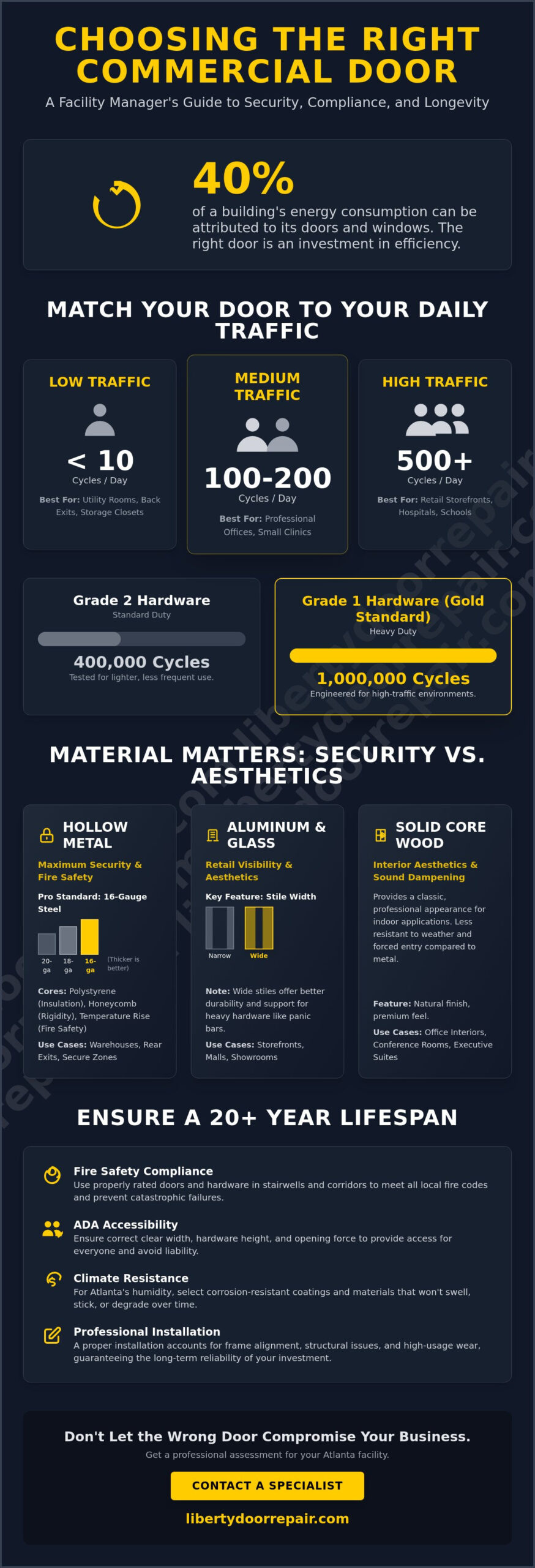
You must categorize your facility by traffic volume. Low-traffic areas, like utility rooms or back exits, might only see 10 cycles a day. Medium-traffic zones, such as professional offices, typically handle 100 to 200 cycles. High-traffic environments, including retail storefronts and healthcare facilities, often exceed 500 cycles daily. For a comprehensive overview of door types and their specific mechanical functions, identifying this volume is the first step in your selection process.
Traffic Volume and Cycle Requirements
Standard doors fail quickly under the stress of 500+ daily cycles. You can estimate your needs by doubling your peak hourly customer count and adding your total staff numbers. This cycle count directly dictates your hardware grade. Grade 1 hardware is the industry gold standard; it is tested to withstand 1,000,000 cycles. Grade 2 hardware is suitable for lighter use and is usually tested for 400,000 cycles. Choosing the wrong grade leads to sagging hinges and failed closers within months of installation.
Environmental Factors and the Atlanta Climate
Comparing Commercial Door Materials: Durability vs. Aesthetics
Material selection is where your security needs meet your brand’s visual identity. Learning how to choose a commercial door requires more than just picking a style that looks good on a floor plan. You must evaluate the structural integrity of the material against its intended environment. Industrial warehouses and high-security zones demand different specifications than a professional law office or a boutique retail shop. The three primary materials used in modern facilities are hollow metal, aluminum with glass, and solid core wood.
When selecting a material, you must also consider ADA requirements for doors. These standards dictate clear width and opening force. Heavier materials require more robust hardware to remain compliant. If you’re unsure which material fits your facility’s footprint, consulting a specialist for commercial door repair and installation can prevent costly regulatory mistakes.
Hollow Metal and Steel Doors
Hollow metal is the gold standard for security and fire protection. In the industry, we measure steel thickness by “gauge.” A 16-gauge steel door is the professional standard for exterior security. It’s significantly thicker and more resilient than the 18 or 20-gauge options found in lighter commercial applications. These doors use specific cores to meet operational needs. Polystyrene cores provide excellent insulation. Honeycomb cores offer structural rigidity. Temperature rise cores are essential for fire-rated stairwells where heat transfer must be limited during an emergency. Use these for rear exits, warehouses, and any zone requiring maximum forced-entry resistance.
Aluminum Storefront and Glass Systems
Retailers often prioritize aluminum storefront doors to maximize visibility. These systems balance a professional look with functional security. You must choose between narrow, medium, or wide stile frames. Narrow stiles provide the most glass surface area for a modern, sleek look. Wide stiles offer more surface area for heavy-duty hardware like panic bars and vertical rods. If your retail space sees high foot traffic, wide stiles are the more durable choice. They resist the “racking” or twisting that often causes glass breakage in lighter frames.
Commercial Wood Doors for Interiors
Wood doors are best suited for interior professional environments. Solid core wood provides superior sound dampening. This makes it the ideal choice for executive offices and private conference rooms. For corridor compliance, you can source fire-rated wood doors that provide up to 90 minutes of protection while maintaining a warm aesthetic. Wood is susceptible to Georgia’s humidity. Don’t use it for exterior entries or high-moisture areas where it will warp and fail within a few seasons. Stick to metal or aluminum for any opening exposed to the elements.
Navigating Mandatory Compliance: ADA and Fire Safety
Compliance isn’t a suggestion. It’s a legal mandate. Atlanta business owners face significant liability if entry points fail an inspection or cause an injury. When deciding how to choose a commercial door, look beyond the initial cost. You’re selecting a critical piece of safety equipment. Federal and local codes dictate everything from the frame width to the specific pressure required to open the door. Failure to meet these standards can result in heavy fines, failed insurance claims, or forced business closures. You need a solution that balances daily utility with strict legal adherence.
ADA Accessibility Standards
The Americans with Disabilities Act (ADA) requires a minimum clear opening width of 32 inches. This measurement runs from the face of the door to the opposite stop when the door is open at 90 degrees. Thresholds are a frequent failure point during local inspections. They cannot exceed 1/2 inch in height to prevent tripping hazards. In modern construction, at least 60% of public entrances must be ADA compliant. Many facilities install ADA-compliant door openers to meet these strict force requirements. These systems require AAADM certification. This ensures the sensors and motors operate safely without striking pedestrians. If your door is too heavy for a customer to open with one hand, it’s a liability.
Fire Door Ratings and Labels
Fire safety standards reached a new level of complexity with the BS 8214:2026 standard. This update emphasizes the structural interface and the whole-system certification of the door assembly. You must follow the NFPA 80 standard for fire doors to maintain your building’s occupancy permit and safety rating. Ratings typically range from 20 minutes to 3 hours. You can identify a compliant door by its permanent metal label on the hinge edge. Do not paint over or remove this label. Fire doors must be self-closing and self-latching to contain smoke and heat during an emergency. If your hardware doesn’t latch securely, the entire fire rating is void. Regular fire door services are required for documented annual inspections. Learning how to choose a commercial door means prioritizing these safety benchmarks over purely aesthetic choices.
The Critical Role of Hardware in Door Selection
Hardware is the engine of your entrance. A door is only as reliable as its weakest piece of hardware. When researching how to choose a commercial door, you must prioritize the “Big Three”: closers, exit devices, and hinges. These components endure the physical stress of every cycle. With manufacturer price increases from brands like ASSA ABLOY and Adams Rite taking effect in early 2026, selecting the right hardware grade now prevents expensive replacements later. If your hardware fails, the most expensive door material in the world won’t protect your facility.
You must match your hardware grade to your traffic volume. Grade 1 hardware is the industry standard for high-traffic retail and healthcare settings. It is tested to survive 1,000,000 cycles. Grade 2 hardware is a cost-effective choice for internal office doors with lower usage. Using the wrong grade leads to mechanical failure and increased maintenance costs within the first year of operation.
Commercial Door Closers and Exit Devices
Hydraulic closers are non-negotiable for professional facilities. They control the closing speed to protect pedestrians and ensure the door latches every time. This is critical for both fire safety and maintaining energy efficiency. Panic bars, also known as crash bars, are required by code in high-occupancy assembly areas. They provide a fail-safe exit path during emergencies. You must properly size this hardware to the specific weight of your door. Undersized hinges or closers lead to door sag. This misalignment destroys the frame and compromises your building’s security.
Access Control and Security Integration
Modern facilities require integrated security. You must choose between electric strikes and magnetic locks. Electric strikes allow for mechanical latching while providing electronic release. They are often preferred because they remain secure even during power failures. Magnetic locks offer extreme holding force but require specialized power-cut integrations to meet fire codes. Implementing access control solutions helps you track employee entry and manage permissions remotely. This eliminates the liability and cost of physical keys. Ensure your hardware is Grade 1 certified by scheduling a professional installation with Liberty Door Repair today.
Professional Installation and Maintenance in Metro Atlanta
The final step in learning how to choose a commercial door is selecting the right team to install it. Many business owners make the mistake of letting a general contractor or a DIY handyman handle the installation. Commercial entry systems are precision instruments. If a frame is off by even a fraction of an inch, the door will fail to latch. This creates immediate security vulnerabilities and energy loss. With 30 plus years of experience, a specialist understands how to diagnose local structural issues common in Atlanta’s older commercial districts before they lead to premature door failure.
You should prioritize a company that holds AAADM certification and maintains high local reviews. This certification is the industry benchmark for automatic door safety. It ensures the technician understands the complex relationship between sensors, motors, and pedestrian safety. A professional installer doesn’t just hang a door; they calibrate the entire system to survive the high-cycle demands of your specific facility.
Why Professional Installation Matters
Precision is mandatory for legal compliance. A professional installer ensures the door frame is perfectly square. This prevents the “binding” that destroys hinges and closers. We also calibrate hydraulic closers to meet strict ADA “closing time” standards. For example, a door must take at least 5 seconds to move from an open position of 90 degrees to 12 degrees. Fire door gaps must also be verified to meet NFPA 80 requirements. These gaps typically cannot exceed 1/8 inch. If your installer misses these details, you face failed inspections and potential legal liability.
Long-term Maintenance and Support
A preventative maintenance schedule is the best way to protect your investment. High-traffic retail storefronts should undergo quarterly inspections. During these visits, technicians lubricate pivots and hinges to extend their operational life. They also check for “door sag” and adjust the closing pressure to account for seasonal temperature changes. Georgia’s humidity can shift the alignment of your entry points over time. Regular adjustments prevent small issues from turning into expensive emergency repairs. Ready to upgrade? Contact Liberty Door Repair for commercial door repair and installation to ensure your facility remains secure, compliant, and accessible for years to come.
Secure Your Facility with Professional Expertise
Mastering how to choose a commercial door involves balancing high-cycle durability with strict regulatory standards. You now understand that your traffic volume dictates your hardware grade and that your material choice must withstand the specific humidity of the Atlanta climate. Fire safety and ADA accessibility are not just options; they are mandatory protections for your business and your customers. Neglecting these technical details often leads to expensive code violations and security gaps that disrupt your daily operations.
Don’t leave your facility’s security and compliance to chance. Liberty Door Repair brings over 30 years of Metro Atlanta experience to every project. Our AAADM-certified technicians are specialists in ADA and Fire Door compliance, ensuring your entry systems are safe and efficient. Get a Professional Commercial Door Evaluation from Liberty Door Repair today to protect your investment. We provide the dependable expertise you need to keep your doors moving smoothly and your facility secure. Your business deserves a reliable entrance that performs for decades.
Frequently Asked Questions
What is the standard size for a commercial door?
The standard size for a commercial door is typically 36 inches wide by 80 or 84 inches high. However, the most critical measurement is the clear opening width. ADA standards require a minimum of 32 inches of clear space when the door is open at a 90-degree angle. This ensures that wheelchairs and mobility devices can pass through the entrance without obstruction.
How much does a commercial door installation cost in Atlanta?
Industry installation costs for commercial doors generally range from $700 to over $5,000 per opening in 2026. Single aluminum storefront systems often fall between $2,200 and $2,600, while double doors can reach $4,800. These figures vary based on material choice, hardware complexity, and any structural modifications required for your specific Atlanta facility. Always verify current manufacturer lead times, as custom systems can take 4 to 8 weeks for delivery.
Do I need a fire-rated door for my business?
You likely need fire-rated doors for corridors, stairwells, and any opening that separates different building sections. Local building codes and the updated BS 8214:2026 standards dictate these requirements based on your specific occupancy type. Fire doors are essential for containing heat and smoke to provide safe exit paths. They must be equipped with self-closing and self-latching hardware to remain compliant with safety regulations.
What is the difference between Grade 1 and Grade 2 door hardware?
Grade 1 hardware is heavy-duty equipment tested to withstand 1,000,000 cycles. It is the professional choice for high-traffic retail or healthcare entrances that see hundreds of visitors daily. Grade 2 hardware is designed for medium-duty use and is typically tested for 400,000 cycles. Choosing the right grade is a key part of learning how to choose a commercial door that won’t require constant repairs.
How often should commercial doors be inspected for safety?
Fire doors require a documented professional inspection at least once every year according to NFPA 80 standards. For high-traffic retail storefronts in Metro Atlanta, we recommend quarterly maintenance checks. Regular inspections identify sagging hinges or failing hydraulic closers before they become security risks. Keeping a regular schedule helps you avoid the high costs of emergency repairs and unexpected code violations.
Can I install an automatic opener on an existing commercial door?
Yes, you can often retro-fit an automatic opener onto your existing commercial door system. The door and frame must be structurally sound and properly aligned for the motor and sensors to function correctly. This is an efficient way to achieve ADA compliance for your public entrance without the expense of a full replacement. It’s an ideal solution for businesses looking to enhance accessibility quickly.
What is an AAADM-certified technician and why does it matter?
An AAADM-certified technician is a professional trained and tested by the American Association of Automatic Door Manufacturers. This certification ensures the technician understands the complex safety standards required to prevent pedestrian injuries. Hiring a certified specialist protects your business from the liability of an improperly installed automatic system. It guarantees that sensors and closing speeds are calibrated to current 2026 safety benchmarks.
How do I know if my door is ADA compliant?
Your door is likely compliant if it provides a 32-inch clear opening and has a threshold no higher than 1/2 inch. The hardware must be mounted between 34 and 48 inches above the finished floor and be operable with one hand without tight grasping or twisting. If you’re researching how to choose a commercial door, verifying these specific measurements is the first step toward meeting federal accessibility requirements.