

This 2026 troubleshooting guide provides the clarity you need to restore your door to quiet, functional operation. You’ll learn how to identify specific failures and distinguish between simple DIY adjustments and high-risk repairs that demand AAADM-certified expertise. We will examine the impact of the new 2024 International Residential Code (IRC) updates effective in Atlanta this year, the rise of ultra-quiet belt drive systems, and the essential maintenance steps required to keep your family or business safe. By the end of this guide, you’ll understand exactly how to handle your door issues with confidence.
Key Takeaways
- Learn to diagnose whether your door’s stuck due to a simple power lockout or a complex mechanical failure.
- Understand why snapped cables and broken springs are high-priority safety risks that require professional handling.
- Identify common garage door problems, like sensor malfunctions and stripped opener gears, to determine if a DIY fix is safe.
- Discover how high-cycle commercial usage and new 2026 Atlanta building codes impact your specific repair requirements.
- See how a professional 25-point safety inspection from AAADM-certified technicians protects your property and ensures reliability.
Identifying Common Garage Door Symptoms and Causes
When your door fails, you need answers fast. Identifying common garage door problems starts with observing the specific behavior of the system. If your door won’t move at all, the first step is to distinguish between a power failure and a mechanical lockout. Check the motor unit’s power cord and the circuit breaker. If the motor hums but the door remains stationary, you might have accidentally engaged the manual lock or the disconnect cord. Understanding the various garage door components involved in your system helps you communicate more effectively with a technician if the issue persists.
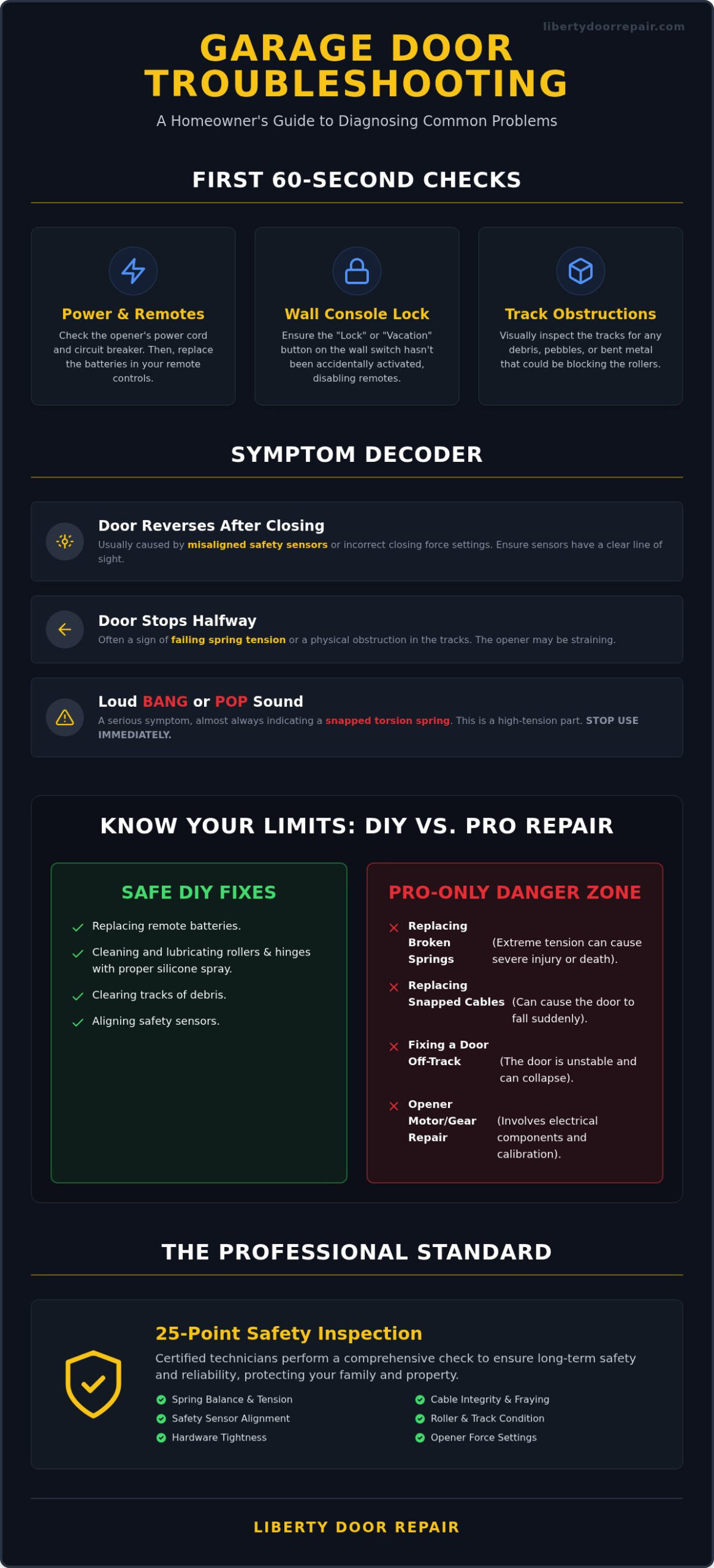
Another frequent frustration occurs when the door reverses immediately after hitting the floor. This is usually caused by misaligned safety sensors or incorrect travel limit settings. These sensors must have a clear line of sight to function. If the door stops halfway up, it’s often a sign of failing spring tension or a physical obstruction in the tracks. Heavy grinding or squeaking sounds typically indicate that your rollers are worn out or the system is desperate for lubrication. Ignoring these symptoms can lead to more expensive repairs or total system failure.
The First 60 Seconds: Quick DIY Checks
Before calling for professional help in Marietta or Alpharetta, perform these rapid assessments. First, check your wall switch and replace the batteries in your remotes. It’s surprisingly common for a dead battery to be the only culprit. Next, verify that the “Lock” button on your wall console hasn’t been accidentally engaged, as this disables all remote signals. Finally, walk along the vertical and horizontal tracks. Look for pebbles, debris, or bent sections of metal that might be blocking the rollers’ path. These simple steps solve a significant percentage of service calls.
Understanding the “Why” Behind the Noise
Your garage door speaks to you through the sounds it makes. Don’t ignore new or worsening noises. Screeching or high-pitched squealing usually indicates metal-on-metal friction. You can often resolve this by applying a high-quality silicone lubricant to the hinges and rollers. Banging or loud popping noises are more serious. These sounds often signal a snapped torsion spring, which is under extreme tension and requires immediate professional attention. If you notice excessive vibration, it typically points to loose hardware or bracket bolts. Tightening these components can prevent a minor nuisance from becoming a safety hazard for your home or business.
Mechanical Failures: Springs, Cables, and Track Issues
Mechanical failures are the heavy hitters of common garage door problems. While a dead remote is a nuisance, a broken spring or snapped cable is a structural emergency. Torsion and extension springs do the heavy lifting, counterbalancing the door’s weight so the motor doesn’t burn out. When a spring snaps, the door becomes a dead weight, often weighing several hundred pounds. Snapped cables represent an even higher security risk. They often cause the door to sag or crash down unevenly, leaving your property exposed and your vehicle trapped.
Tracks and rollers also suffer from significant wear over time. Tracks can become misaligned due to loose mounting brackets or accidental vehicle impacts. If left uncorrected, a slight bend will worsen as the rollers force their way through the restriction, eventually causing the door to jump the track entirely. Roller material also dictates performance. Plastic rollers are brittle and prone to cracking. Steel rollers are durable but loud. Nylon rollers with ball bearings offer the best combination of quiet operation and longevity for most Atlanta homes.
The Danger Zone: Why Springs and Cables Are Pro-Only
Springs store thousands of pounds of torque. This energy is released instantly if a part fails during a DIY attempt. Attempting a garage door repair on these components without specialized winding bars is extremely dangerous. Common injuries include facial lacerations, broken fingers, and life-threatening trauma. Professional technicians use specific tools and safety protocols to manage this tension safely. If you see a gap in your spring or a frayed cable, stop using the door immediately to avoid a total collapse.
Track and Roller Maintenance
Regular maintenance helps prevent common garage door problems from escalating. You can safely clean tracks using a damp cloth and a non-greasy cleaner. Avoid heavy grease, which attracts dirt and clogs the system. In Metro Atlanta, high humidity levels accelerate track oxidation and rust. This moisture causes rollers to bind and tracks to pit over time. Watch for “flat spots” on your rollers. These cause jerky, vibrating movements that strain the motor. Adhering to federal safety standards ensures your system remains reliable under these environmental pressures. If your tracks look rusted or misaligned, a professional inspection is the safest next step.
Electronic and Sensor Malfunctions: Troubleshooting Your Opener
Internal opener failures often involve stripped gears or compromised circuit boards. Stripped plastic gears typically result from years of lifting an unbalanced door. If you hear the motor running but the chain or belt doesn’t move, the internal gears have likely failed. Alternatively, circuit board issues can cause erratic behavior, such as the door opening on its own or failing to respond to commands. In suburban Atlanta neighborhoods, remote control signal interference is a growing issue. Nearby wireless devices or new cellular towers can disrupt the radio frequency used by your remote, requiring a frequency adjustment or a range extender.
Start by checking the LED lights on the sending and receiving eyes near the floor. A steady light on both sides indicates a successful connection. If one light is flashing or dark, the beam is broken or misaligned. Clean the lenses with a soft cloth to remove dust, spider webs, or thick Atlanta pollen. Gently adjust the metal brackets by hand until both lights stay solid and steady. Never attempt to bypass these sensors. Bypassing safety features is a major safety violation that creates significant liability for your property.
Opener Logic Board and Motor Issues
Electronic components often provide warning signs before total failure. Recognizing the smell of a burnt motor or electrical components is critical. A sharp, ozone-like odor usually indicates a shorted circuit board or an overheated motor. If the motor hums but the door doesn’t move, the start capacitor has likely failed. When sourcing door parts & replacements, you must match the exact brand and model of your opener. Using generic parts on brands like LiftMaster or Genie can lead to further electrical damage. Modern digital openers also require precise “Travel Limit” settings to ensure the door seals against the floor without straining the motor.
Commercial Garage Door Problems vs. Residential Issues
Commercial doors operate under significantly higher stress than residential systems. While a homeowner might open their door four times a day, a warehouse door may cycle hundreds of times in a single shift. This high-cycle usage means commercial springs and cables wear out much faster. These systems are the backbone of your facility’s logistics. When they fail, it isn’t just an inconvenience; it’s a threat to your bottom line. Commercial common garage door problems often stem from this relentless operational demand.
Impact damage is another uniquely commercial issue. Forklift and delivery truck collisions with dock doors are frequent in busy Atlanta distribution centers. A minor bump can misalign tracks or crush panels, making the door unsafe to operate. Storefronts also face challenges with automatic door sensor sensitivity. In high-traffic areas, sensors can become miscalibrated or obstructed by debris. This prevents the door from closing properly and compromises building security.
Warehouse and Loading Dock Challenges
Loading dock efficiency depends on the seamless operation of dock doors and levelers. If a door becomes stuck, shipping and receiving grind to a halt. The cost of downtime for an Atlanta business can reach thousands of dollars per hour. Heavy-duty industrial operators require specialized maintenance to handle the weight of insulated or rolling steel doors. Regular inspections of the motor’s brake system and drive chain are mandatory to prevent sudden failures that could injure workers.
ADA and Fire Code Compliance
Legal compliance is a critical factor for commercial property managers. We offer automatic door services to ensure your facility remains ADA-compliant and accessible to all customers. Failures in panic bars or exit hardware lead to failed safety inspections. Atlanta businesses must also prioritize fire door services for annual drop testing. These fire-rated doors must close automatically during an emergency to contain smoke and flames. Neglecting this maintenance creates massive liability and safety risks. If your commercial system shows signs of wear, contact us for professional commercial door repair to ensure your facility remains safe and compliant.
Professional Repair and Maintenance in Metro Atlanta
Knowing when to stop DIY efforts is critical for your safety. While cleaning tracks or replacing remote batteries is manageable, most common garage door problems involve high-tension components that require specialized tools. If your door is off-track, makes loud grinding noises, or has a visible gap in the spring, stop immediately. Attempting these repairs without training often leads to severe injury or further property damage. Liberty Door Repair brings 30+ years of experience to every job site. We provide a level of reliability that nationwide contractors simply cannot match. Our team serves the entire Metro Atlanta area, including Marietta, Alpharetta, and Decatur, with a focus on fast, effective resolution.
A professional 25-point safety inspection is the most valuable service you can schedule for your door. This isn’t a casual glance; it is a comprehensive technical audit of your entire system. Our technicians verify the balance of the door, the integrity of the cables, and the force settings on your opener. This proactive approach identifies small issues before they become expensive failures. It ensures your system operates quietly and safely for years to come. Relying on local experts who understand the impact of Georgia’s climate on door hardware is essential for long-term performance.
What to Expect from a Professional Service Call
Our service process is designed to resolve common garage door problems with efficiency and transparency. We start with a detailed diagnostic of your springs, rollers, and opener settings. We don’t just fix the immediate symptom; we find the root cause. Technicians apply professional-grade silicone lubrication to all moving parts to ensure smooth operation. We also tighten every nut, bolt, and hinge in the system. This reduces vibration and eliminates the frightening noises that often plague older doors. You’ll receive a clear explanation of the work performed and the current status of your hardware.
Scheduling Your Atlanta Door Inspection
Choosing the right partner for your facility is a matter of security and compliance. For business owners, identifying AAADM-certified technicians is a requirement for maintaining automatic door systems. You need a company with a proven track record in commercial door repair Atlanta to ensure your property remains accessible and secure. Whether you are in Alpharetta, Decatur, or Roswell, we are ready to assist. Contact us today to receive a local quote and restore the safety of your residential or commercial property. Our decades of local expertise ensure your door is handled by the best in the business.
Secure Your Property with Professional Expertise
Managing your garage door shouldn’t be a source of constant stress. You now understand how to identify the difference between a simple sensor misalignment and a high-risk mechanical failure. Addressing common garage door problems promptly ensures that your home or business remains secure and fully operational. Whether you are dealing with the high-cycle demands of an Atlanta warehouse or the daily needs of a residential driveway, professional maintenance is the most effective way to avoid unexpected downtime.
Our team provides the peace of mind that comes with 30+ years of local experience and AAADM-certified technicians. We serve 20+ Atlanta-area cities, bringing specialized tools and expertise to every repair. Trusting a local specialist ensures your system complies with current safety standards and operates at peak performance.
Get Professional Garage Door Repair in Metro Atlanta and let our experts handle the heavy lifting. You deserve a door that is quiet, reliable, and safe for everyone who uses it.
Frequently Asked Questions
Why is my garage door making a loud grinding noise?
Grinding noises are typically caused by worn-out metal rollers or a lack of proper lubrication on the hinges and tracks. If the noise originates from the opener, the internal plastic gears may be stripped. This is one of the most frequent common garage door problems in older Atlanta homes. Apply a silicone-based lubricant to moving parts immediately. If the grinding persists, the rollers likely have flat spots and require professional replacement to prevent motor strain.
Can I replace a garage door spring myself?
No, you should never attempt to replace a garage door spring yourself. Torsion springs store thousands of pounds of torque that can cause life-threatening injuries if released accidentally. Professional technicians use specialized winding bars and safety protocols to manage this tension safely. Because springs are responsible for lifting the entire weight of the door, an incorrect DIY installation can also burn out your opener motor or cause the door to fall.
Why does my garage door open back up after it closes?
Your door reverses because the safety sensors are misaligned or obstructed. Check the small LED lights on the sensors near the floor. If they are blinking, the beam is broken. Clean the lenses of dust or spider webs and ensure the brackets are straight. If the sensors are clear, your opener’s “down travel” limit might be set too far. This causes the door to hit the floor too hard and trigger a safety reversal.
How often should I have my garage door serviced in Atlanta?
You should schedule a professional safety inspection at least once per year. Atlanta’s high humidity and seasonal temperature swings cause metal components to expand, contract, and oxidize over time. Regular maintenance prevents common garage door problems like rusted tracks or frayed cables from leading to a total system failure. A yearly tune-up includes lubricating all moving parts, tightening loose hardware, and testing the balance of the door to ensure long-term reliability.
What should I do if my garage door cable is frayed or snapped?
Stop using the door immediately if you notice a frayed or snapped cable. The cables work in tandem with the springs to lift and lower the door safely. When one cable fails, the door will often sag to one side. This puts extreme stress on the remaining hardware and can bend the tracks. This creates a significant safety risk for your property. Keep people and vehicles away from the area until a technician can safely replace the cables.
Why is my garage door opener remote not working even with new batteries?
If new batteries don’t fix the issue, you likely have signal interference or a faulty logic board. Suburban Atlanta neighborhoods often experience radio frequency interference from nearby electronics or new cellular towers. Try standing closer to the door to see if it responds. If that fails, you may need to clear the opener’s memory and reprogram the remotes. If the wall console works but no remotes do, the opener’s receiver might be damaged.
Does Liberty Door Repair handle commercial warehouse doors?
Yes, Liberty Door Repair specializes in commercial warehouse and loading dock doors across Metro Atlanta. We understand that downtime at a distribution center directly impacts your bottom line. Our AAADM-certified technicians are experienced with high-cycle torsion springs, industrial openers, and dock levelers. We also provide fire door drop testing and ADA-compliant automatic door services. With 30+ years of experience, we provide the heavy-duty solutions required for intense industrial operational demands.
Is it worth repairing an old garage door opener or should I replace it?
You should consider replacing your opener if it is more than 15 years old or lacks modern safety features. Newer models offer improved security with rolling codes and smartphone integration for real-time monitoring. If your current motor is making excessive noise or requires frequent repairs, a replacement is often more cost-effective than constant part swaps. Modern belt-drive systems are significantly quieter and more energy-efficient than older chain-drive models found in many garages.