

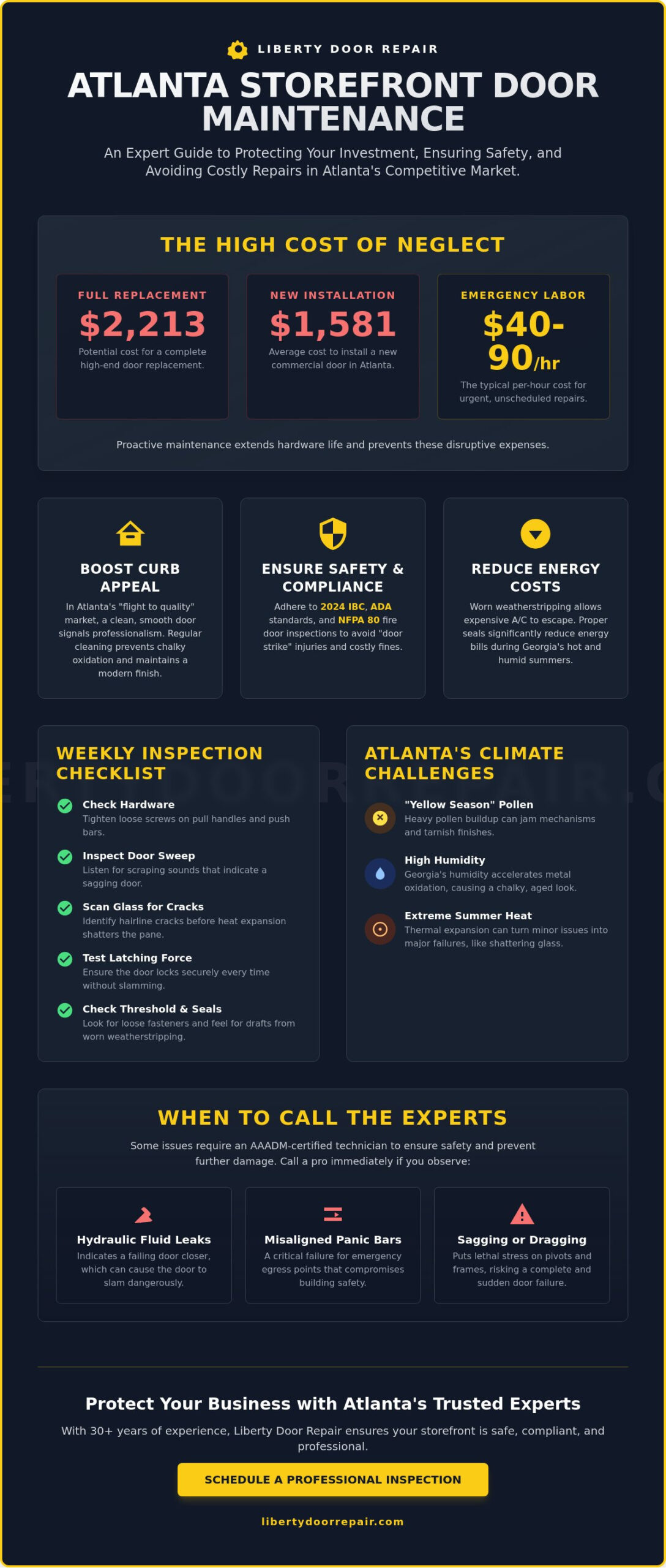
With Atlanta ranked as the #2 target market for commercial real estate investment in 2026, the “flight to quality” is no longer a suggestion. It’s a business requirement. Your entrance is the first thing a customer experiences, yet it’s easy to overlook aluminum storefront door maintenance until a door slams or a lock fails. These issues aren’t just minor inconveniences. They are liability risks that lead to emergency repair bills, especially with local labor now costing between $40 and $90 per hour.
You already know that a sticking door drains your energy budget and your curb appeal. As trusted experts with 30+ years of experience, we’re here to help you protect your investment. This guide provides an expert framework to help you avoid the $2,213 average cost of a full door replacement while staying compliant with the 2024 International Building Code. We’ll show you how to protect hardware from Georgia’s humidity, handle mandatory NFPA 80 inspections, and keep your storefront operating as smoothly as the day it was installed.
Key Takeaways
- Learn how a consistent aluminum storefront door maintenance schedule protects your curb appeal and prevents the “sticky door” syndrome that drives customers away.
- Discover the correct techniques for cleaning anodized aluminum surfaces and inspecting glass seals without damaging your door’s finish.
- Identify early warning signs of hardware failure, such as hydraulic fluid leaks in closers or misaligned panic bars, before they become security risks.
- Understand how to manage Atlanta’s unique climate challenges, including “Yellow Season” pollen buildup and metal expansion during extreme July heat.
- Find out when a minor adjustment becomes a liability risk and why AAADM-certified technicians are required for complex automatic door repairs.
Why Aluminum Storefront Door Maintenance Matters for Atlanta Businesses
Atlanta is currently the #2 target market for commercial real estate investment in the United States. With 95% of investors planning to maintain or increase their holdings in 2026, the competition for high-quality tenants and customers is fierce. Your entrance is your first handshake. If a customer struggles with a “sticky door” or hears a loud metal scrape upon entry, their confidence in your business drops immediately. Investing in aluminum storefront door maintenance ensures that your first impression remains professional while protecting your bottom line from unnecessary expenses.
Neglect is expensive. The average cost to install a new commercial door in Atlanta currently sits at $1,581, with some high-end replacements reaching $2,213. By understanding door components like pivots, sweeps, and frames, you can identify minor wear before it mandates a full commercial door replacement. Proactive care extends the life of your hardware and keeps your facility running without the $40 to $90 per hour cost of emergency labor.
Curb Appeal and First Impressions
In retail hubs like Marietta and Alpharetta, the “flight to quality” trend means customers favor modern, well-kept buildings. Aluminum is durable, but Atlanta’s humidity and heavy pollen seasons can cause oxidation and unsightly buildup. Oxidized aluminum looks chalky and aged, which can make even a successful business appear struggling. Regular aluminum storefront door maintenance involves cleaning and treating these surfaces to maintain a sleek, metallic finish. When your glass is clear and your frames are polished, you signal to every passerby that you value quality and detail.
Liability and Safety Compliance
Safety is a legal mandate, not a suggestion. As of January 1, 2026, all permitted renovations in Atlanta must comply with the 2024 International Building Code (IBC). This includes ensuring your doors meet strict ADA accessibility standards and egress requirements. A door that slams too quickly or requires too much force to open can cause “door strike” injuries, leading to costly liability claims. Furthermore, businesses must adhere to NFPA 80 standards, which require annual inspections for fire-rated openings. Utilizing professional fire door services ensures your egress points are safe, functional, and fully compliant with Georgia Department of Community Affairs regulations. Our trusted experts help you navigate these codes so you don’t have to worry about surprise fines or safety failures.
A Step-by-Step Routine for Commercial Glass Door Care
Establishing a consistent aluminum storefront door maintenance routine is the most effective way to protect your property investment. Atlanta’s high-traffic retail environments put immense stress on hinges and closers. Small issues quickly escalate into major failures if ignored. By spending fifteen minutes a week on inspections, you can keep your entrance operating safely and efficiently. Consistency prevents the need for emergency service calls and helps you avoid the $1,581 average cost of a full door replacement.
The Daily and Weekly Inspection Checklist
Start with the hardware. Check pull handles and push bars for loose screws. Vibrations from constant use often back these out over time. Next, observe the “sweep” at the bottom of the door. It shouldn’t drag on the threshold. If you hear a scraping sound, your door may be sagging. This puts lethal stress on the pivots and can lead to a door falling out of its frame. You should also include these steps in your weekly walkthrough:
- Identify hairline cracks in glass before they become safety hazards.
- Test the latching force to ensure the door locks securely every time.
- Feel for drafts around the perimeter that indicate worn weatherstripping.
- Check the threshold for loose fasteners that could cause a trip-and-fall accident.
In Georgia’s 90-degree summers, thermal expansion can turn a tiny nick in the glass into a shattered pane in hours. Worn weatherstripping is equally problematic; it allows expensive air conditioning to escape, significantly driving up energy bills during peak humidity months.
Cleaning and Lubrication Best Practices
Anodized aluminum requires specific care to prevent pitting and corrosion. Use a mild soap and water solution with a soft cloth. Avoid abrasive pads or harsh chemicals that strip the protective finish. Atlanta’s “Yellow Season” and red clay are particularly hard on moving parts. Debris collects in the bottom tracks and pivots, acting like sandpaper on your door’s mechanical components.
When it’s time to lubricate, your choice of product matters. Never use heavy grease or oils. These attract dust and grit, creating a grinding paste that destroys hardware from the inside out. Instead, use a high-quality silicone spray or dry graphite. These provide the necessary slip without the sticky residue. If you notice hydraulic fluid leaking from the door closer, lubrication won’t help. This is a sign of internal seal failure and requires immediate attention from a professional. If you’re unsure about a specific hardware issue, consulting a trusted expert can prevent a minor DIY mistake from becoming an expensive liability.
Finally, test the closing speed. A safe door takes approximately 5 to 7 seconds to close from a 90-degree angle. If it slams, it’s a liability risk. If it doesn’t latch, it’s a security risk. Adjusting these settings requires precision to stay within ADA guidelines and avoid “door strike” injuries. Keeping your tracks clear of Atlanta red clay ensures that your automatic sensors and manual pivots operate without resistance.
Assessing Hardware Health: Closers, Pivots, and Panic Bars
Hardware failure is the primary cause of commercial door malfunctions in Metro Atlanta. While the aluminum frame is built to last decades, the mechanical components bear the brunt of thousands of cycles each month. Effective aluminum storefront door maintenance requires a deep dive into the “engine” of your entryway. If your hardware fails, your door becomes a security risk or a safety hazard for every customer who walks through it.
Start by inspecting your door closers. These hydraulic devices control the opening and closing force. If you notice an oily residue on the closer body or see fluid dripping onto the floor, the internal seals have failed. A “leaky” closer cannot be repaired; it must be replaced to prevent the door from slamming. This is a critical safety issue. A door that slams can lead to significant liability if it strikes a customer or employee.
Understanding Door Closer Adjustments
Most commercial closers feature two primary adjustment valves: sweep speed and latch speed. Sweep speed controls the door from its wide-open position down to about 10 degrees. Latch speed controls that final few inches of closing. You want a smooth transition that ensures the door latches securely without bouncing. If you turn the adjustment screws and notice no change in speed, the internal valves are likely worn out. At this point, no amount of DIY tweaking will fix the problem. You need a trusted expert to install a new unit that meets current UL 325 safety standards.
Pivot and Hinge Maintenance
Storefront doors usually rotate on pivots rather than standard hinges. Over time, the bottom pivot can wear down, causing a “dropped” door. You’ll recognize this if the top corner of the door scrapes against the frame or if the bottom edge drags on the threshold. This misalignment puts massive stress on the top pivot, which is essential for lateral stability. Ignoring a sagging door eventually leads to a broken glass pane or a door that physically falls out of the opening. Replacing worn door parts and replacements early prevents these high-cost emergencies.
Finally, don’t overlook your emergency exit hardware. Maintaining panic devices and push bars is a legal requirement for fire code compliance in Georgia. Test these daily. The bar should depress easily and the latch should retract fully without sticking. If the mechanism feels “gritty” or requires excessive force, it’s time for a professional cleaning and adjustment. Security and safety go hand-in-hand. A well-maintained panic bar ensures your building is accessible and ready for a safe egress at all times.
Atlanta Seasonal Challenges: Pollen, Humidity, and Shifts
Atlanta’s climate is notoriously hard on building materials. While aluminum is resilient, the city’s extreme humidity and seasonal shifts create unique hurdles for aluminum storefront door maintenance. From the suffocating “Yellow Season” to the blistering heat of July, your doors must withstand more than just foot traffic. Neglecting these environmental factors leads to hardware failure and increased energy costs.
Combating the Georgia Pollen Blanket
Between March and May, Atlanta’s pollen count often breaks records. This fine yellow dust is more than an aesthetic nuisance. It acts as a powerful abrasive. When pollen settles into pivots and hinges, it mixes with existing lubricants to create a thick, gritty paste. This mixture grinds down metal components every time the door opens. It essentially acts like sandpaper on your hardware’s internal surfaces.
Cleaning your hardware is non-negotiable during these months. Wipe down all visible surfaces and use compressed air to clear out tracks. This is especially vital for businesses using sophisticated access control solutions. Optical sensors and card readers can fail if dust and pollen interfere with their electronic signals. Keeping these components clear ensures your security remains uncompromised and your entrance stays professional.
Expansion, Contraction, and Alignment
Temperature swings in areas like Decatur and Brookhaven are frequent and sharp. In the height of summer, high humidity and direct sunlight cause aluminum frames to expand. This often results in doors that stick or fail to latch properly because the gaps between the door and the frame have vanished. Conversely, winter brings North Georgia drafts that can significantly increase your heating costs if seals aren’t tight. Aluminum storefront door maintenance must account for these physical shifts in the metal.
Check your weatherstripping twice a year. It must remain pliable to handle the metal’s movement. If it becomes brittle in the heat, it will crack and fall out, leaving your building exposed to the elements. After heavy summer storms, always inspect the bottom tracks of automatic doors. Debris like twigs or mulch can easily jam the mechanism, leading to a burnt-out motor or a door stuck in the open position. If your doors have started sticking as the temperature rises, don’t wait for a total lock-out. You should request service from our skilled technicians to realign your hardware before the next heatwave. Our 30+ years of local experience means we understand exactly how Atlanta’s weather impacts your specific storefront.
Professional Maintenance vs. DIY: When to Call the Experts
Basic cleaning and visual checks are essential parts of your weekly routine. However, technical aluminum storefront door maintenance requires specialized tools and training. Commercial glass doors often weigh over 200 pounds. Attempting to realign a sagging frame or adjust a high-tension closer without the right equipment is dangerous. A single mistake can lead to shattered glass or a door that physically falls out of its opening, creating an immediate liability risk for your Atlanta business.
Professional technicians identify structural issues that a DIY approach will miss. If your aluminum sash has hairline fractures or requires precision welding, a quick fix won’t suffice. Our skilled technicians bring 30+ years of experience to every job, ensuring your entryway stays compliant with the 2024 International Building Code. Setting up a preventative maintenance contract is the most effective way to protect your bottom line. It allows you to catch minor wear before it escalates into the $1,581 average cost of a full door replacement.
The Value of AAADM Certification
Automatic doors require a higher level of expertise. You should only trust AAADM-certified technicians for your automatic door services. These experts are specifically trained to test monitored entrapment protection and sensor timing according to UL 325 safety standards. A certified inspection covers complex electronic components and safety zones that general handymen aren’t qualified to evaluate. Furthermore, many insurance providers offer lower premiums to businesses that can provide documentation of annual safety inspections performed by certified professionals. It’s a small investment that provides massive peace of mind.
Signs You Need Immediate Professional Help
Some door issues are too urgent to wait for a scheduled walkthrough. If you notice any of the following, call a trusted expert immediately:
- Visible hydraulic fluid leaking from the closer body or dripping onto the floor.
- Glass that has visibly shifted or “slipped” within the aluminum sash.
- Panic bars that fail to latch securely or require excessive force to release.
- Automatic sensors that fail to detect pedestrians consistently.
Ignoring these signs can lead to “door strike” injuries or security breaches after hours. Don’t let a minor hardware glitch turn into a costly legal or safety crisis. Trust the experts at Liberty Door Repair for your commercial door services. We provide the reliable solutions you need to keep your Metro Atlanta storefront safe, secure, and fully operational.
Protect Your Business with Professional Door Care
Your storefront door is more than just an entrance. It’s a critical component of your business’s safety and curb appeal. Proactive aluminum storefront door maintenance prevents the “sticky door” syndrome that drives customers away. It also helps you avoid the $40 to $90 per hour cost of emergency labor. By managing Atlanta’s unique seasonal shifts and ensuring your hardware meets the latest 2024 International Building Code, you protect both your investment and your visitors.
Don’t wait for a hardware failure to compromise your security or accessibility. Our AAADM-certified technicians bring 30+ years of Metro Atlanta experience to every inspection and repair. We provide expert solutions for commercial security and ADA compliance, ensuring your facility remains open and safe for every customer. Let our trusted experts handle the technical details so you can focus on growing your business with confidence.
Request Expert Storefront Door Maintenance in Atlanta
Frequently Asked Questions
How often should I lubricate my aluminum storefront door hardware?
High-traffic commercial doors in Metro Atlanta require hardware lubrication every six months to ensure smooth operation. During the heavy pollen season from March to May, you should inspect components quarterly. Dust and grit from the “Yellow Season” act as abrasives in your pivots. Regular lubrication is a core part of aluminum storefront door maintenance that prevents premature hardware failure and costly emergency repairs.
Can I use WD-40 on my commercial door pivots and hinges?
No, you should never use standard WD-40 on commercial door hardware. It is a solvent that strips away essential grease and attracts dust, which eventually creates a grinding paste. Instead, use a high-quality silicone spray or dry graphite. These products provide the necessary slip without the sticky residue that traps Atlanta red clay and debris inside your hinges and pivots.
Why is my storefront door slamming even after I adjusted the closer?
Slamming usually indicates an internal seal failure and a loss of hydraulic fluid. If your adjustment screws don’t change the closing speed, the closer’s internal valves are likely worn out. A slamming door is a major liability risk that can lead to “door strike” injuries. You need a trusted expert to replace the unit immediately to ensure your entrance remains safe and compliant.
What is the best way to clean anodized aluminum door frames in Atlanta?
The best way to clean your frames is with a mild soap and water solution and a soft cloth. This safely removes Atlanta’s red clay and pollen without damaging the protective finish. Avoid abrasive pads or harsh chemical cleaners. These can strip the anodized layer, leading to permanent pitting and oxidation that ruins your building’s professional curb appeal.
How do I know if my storefront door is ADA compliant?
ADA standards require that interior and exterior doors have a maximum opening force of 5 pounds. Additionally, the door must take at least 5 seconds to close from a 90-degree open position to 12 degrees. Our AAADM-certified technicians use specialized gauges to verify these precise measurements. Meeting these standards protects your business from accessibility lawsuits and ensures safety for all customers.
What should I do if my aluminum door is dragging on the threshold?
Stop using the door immediately and inspect the bottom pivot for signs of sagging or wear. Dragging indicates that the door has “dropped” within its frame, which puts lethal stress on the top pivot and glass. This is a common issue addressed during aluminum storefront door maintenance. It usually requires a professional pivot replacement or frame realignment to prevent the glass from shattering.
Is it normal for my door to fit differently in the summer than in the winter?
Yes, aluminum is highly sensitive to temperature and expands significantly during Atlanta’s humid July heatwaves. This expansion often causes doors to stick or fail to latch properly. In the winter, the metal contracts, which can create gaps and drafts. Professional hardware adjustments twice a year account for these physical shifts and keep your storefront operating correctly regardless of the season.
When should I replace my storefront door instead of repairing it?
You should consider replacement if the aluminum frame is cracked or if the repair costs exceed 50% of the replacement value. With new installations averaging $1,581 in the Atlanta market, major structural damage often makes repair uneconomical. If your door has shifted within the sash or the frame is warped from years of neglect, a full replacement is the safest and most reliable solution.